Allure's Sunscreen-Stick Surge Points to a Summer Checkout Play
Jun 16, 2026/4 min read
A June 16 signal cluster suggests sunscreen sticks are moving from convenience item to summer merchandising tool as beauty shoppers prioritize portability, public reapplication, and event-day carry.
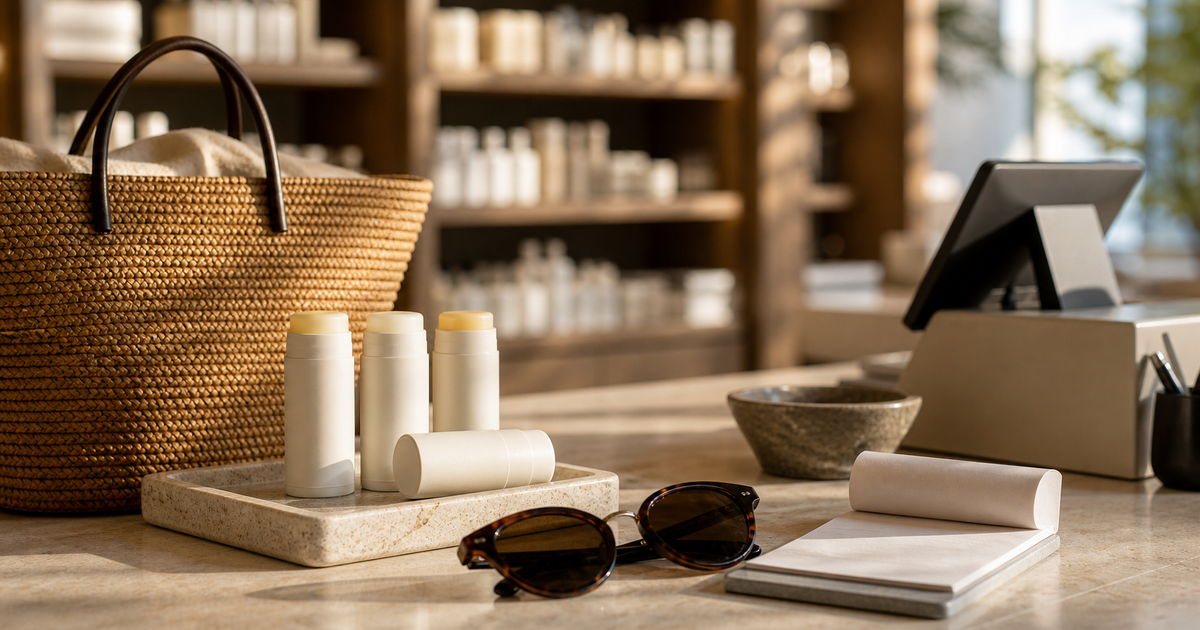
SOCELLE editorial photo illustration for summer SPF merchandising and checkout retail strategy.
Sunscreen sticks look like a small category story, but the June 16 signal mix says something larger: beauty shoppers are rewarding formats that travel well, can be reapplied in public, and fit into a summer day that moves between errands, events, and outdoor exposure. For operators, that makes portable SPF less of a seasonal side item and more of a practical merchandising lane. Readers tracking the wider desk can follow more operator signals at [/intelligence](/intelligence).
What happened
The top hot cluster this hour was led by Allure's June 16 roundup of nine sunscreen sticks, which framed the format around convenience, cleaner reapplication, and easier carry. The product set spanned mineral and chemical options, with specific use cases tied to finish, sensitivity, and wear: EltaMD for clear mineral coverage, Innisfree for invisible reapplication, Shiseido for water resistance, Bubble for dry skin, and Abib for face-and-body glide. The through-line was not novelty. It was portability. The article repeatedly returned to what sticks solve in the real world: less mess, easier touch-ups, and better odds that consumers will keep protection with them instead of leaving a full-size bottle at home.
That portability signal matters more when it appears alongside adjacent culture coverage about how consumers are dressing and shopping for public moments. In The Guardian's Knicks-fashion report, celebrity courtside looks are framed as a full fashion event rather than simple fanwear. In Business Insider's report on Jordyn Woods' Knicks-themed bag, an accessory tied to a live sports moment became a retail story because it converted cultural visibility into product demand. These are different categories, but together they sharpen the same operator read: summer shoppers are organizing purchases around mobility, visibility, and what belongs in the bag.
This is why the Allure story should not be read only as a beauty-editor listicle. In the context of the wider cluster, it reads more like a demand signal around format, not just formula.
Why it matters for operators
This is the part that beauty retail, spa, medspa, and resort operators should take seriously. Portable SPF is easier to understand, easier to demonstrate, and easier to attach to an existing visit than many larger skin-care stories. A sunscreen stick can sit at checkout, travel into a beach bag, fit inside a treatment aftercare bundle, or be added to a front-desk recommendation without creating friction. That makes it operationally useful.
For beauty retail, the immediate opportunity is assortment architecture. If shoppers are increasingly buying for movement, shelf logic should reflect that. Grouping sunscreen sticks by finish, skin feel, or use moment can outperform a flat sun-care bay in summer. A dewy option, a no-white-cast option, and a water-resistant option each answer a different carry scenario. Operators do not need to overstate benefits to sell that story; they need to make the occasion legible.
For spas and medspas, the value is not only in resale. Portable SPF is one of the cleanest post-service continuity items because it matches actual client behavior after facials, peels, laser-adjacent recovery windows, or daylight commuting. The commercial point is not to give medical advice. It is to recognize that clients often leave a treatment room and go straight back into a normal day. Products that travel well are more likely to stay in rotation, which makes the retail attachment more defensible and the aftercare conversation easier to remember.
There is also a margin and basket implication. Checkout categories work best when the shopper immediately understands why the item belongs in today's plan. Sunscreen sticks fit that requirement because the use case is visible. They are compact, often cleaner to apply than lotion, and easier to imagine using in transit, at an outdoor lunch, after a workout, or before an event. That same logic is what turns a fashion accessory or a team-color bag into a live retail object during a cultural moment: the product has a role in the day, not just a place on the shelf.
Operators should also pay attention to the language in the lead source. Allure emphasized reapplication, portability, feel, and finish more than ingredient theater. That suggests the winning sales script is practical, not overly technical. Staff should be able to explain who a given stick is for, where it fits in a routine, and why it is easier to keep close at hand than a larger format. For many stores, that is a stronger conversion path than trying to win on an abstract education pitch.
What to watch
Watch whether more June and July product coverage centers on portable SPF formats instead of full-size lotions. If that pattern holds, it confirms format-led demand.
Watch how often event dressing, outdoor entertainment, and travel accessories show up alongside beauty buying signals. That overlap supports bag-first merchandising.
Watch basket data on checkout and travel-size add-ons. If sunscreen sticks lift attachment without discounting, the summer case gets stronger.
Watch whether medspa and spa teams can convert portable SPF through aftercare and front-desk scripting rather than only through retail shelving.
The near-term operator read is straightforward: sunscreen sticks are becoming useful because they fit how people move, not because they are a trendy object on their own. Teams that merchandise for carry, re-entry into the day, and visible touch-up moments will likely capture more value from summer SPF than teams that treat sun care as a once-a-season compliance shelf. This is market information, not clinical, legal, or business advice.