Ulta and Elsevier Signals Raise the Bar for Beauty Claims
Jun 25, 2026/4 min read
A clinical scar-care study, Ulta's Gen Alpha research, Elsevier's evidence tools, and Thunes' awards point to one operator mandate: prove the claim before scaling it.
Share this report
Send it to a colleague or save the link for later.
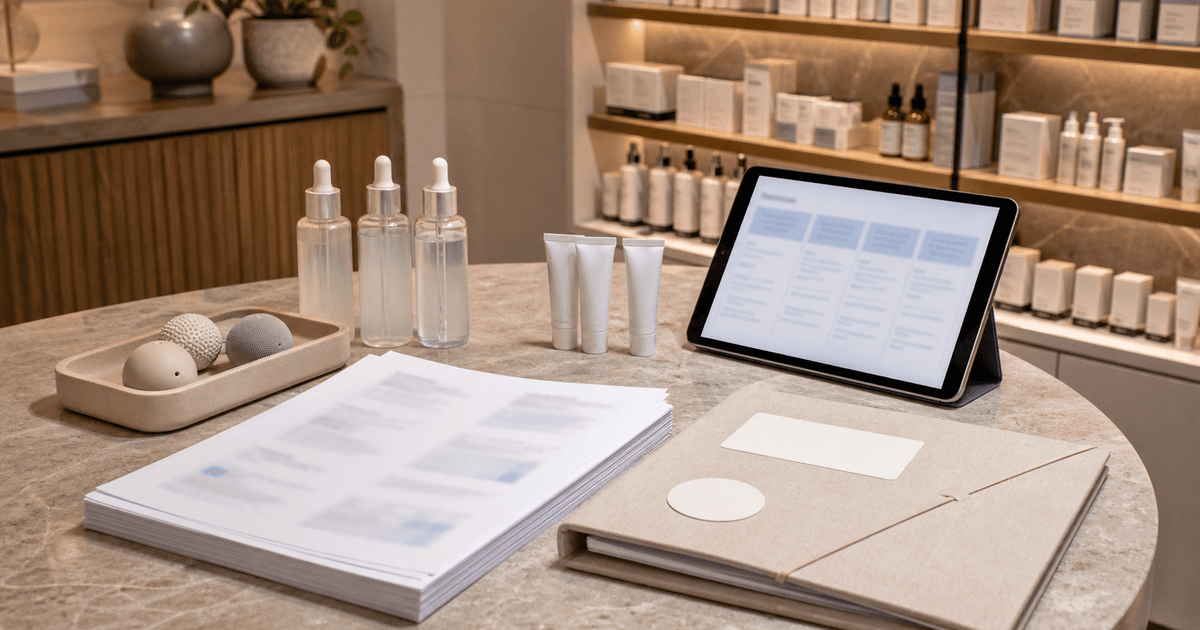
SOCELLE editorial image for beauty operators reviewing claims, research, and retail proof standards.
Beauty operators are entering a stricter proof cycle in which product claims, shopper research, research tools, and vendor promises all need clearer evidence before they reach a client, shelf, or partnership deck.
What happened
A June 24 EarlyView article in the International Journal of Cosmetic Science examined scar appearance in a cosmetic study involving a dexpanthenol-containing silicone gel and massage ball in adults and children. For medspa and skincare teams, the important signal is not a new treatment protocol. It is that treatment-adjacent beauty language keeps moving closer to documented study design, measured outcomes, and careful claim boundaries.
The retail side is moving in the same direction. Ulta Beauty and NielsenIQ released Gen Alpha beauty research showing young consumers discover beauty online but still validate products in the real world. The study says 78% discover beauty online, while category preference remains strongly in-store, including 73% for fragrance, 70% for makeup, and 66% for skincare, hair, and nails.
Elsevier added another layer by expanding LeapSpace with Writing Coach, Claim Radar, and Compare Tables, positioning the tools around evidence gaps, claim checks, and research comparison across a large scientific knowledge base. Separately, Thunes highlighted its second consecutive Juniper Research Future Digital Awards recognition for cross-border platform and B2B payments work. That may look outside beauty at first glance, but it belongs in the same operator conversation: vendor claims also need evidence.
Why it matters for operators
For medspas, salons, beauty retailers, and clinical-skincare brands, the practical lesson is to separate
Related on SOCELLE
The live market connected to this report.
From the analysis into the live graph — the roles hiring now and the companies moving in Medspa, straight from the SOCELLE board.
01Beauty operators are seeing proof expectations tighten across product claims, consumer research, research tooling, and vendor evaluation.The cluster combines a cosmetic scar-care study, Gen Alpha beauty research, research workflow tooling, and cross-border payments recognition.
02Gen Alpha beauty shoppers remain tied to physical validation even when discovery starts digitally.Ulta's NielsenIQ study reports online discovery alongside continued category preference for in-store beauty shopping.
03Evidence review is becoming an operating process, not just a regulatory or marketing task.Elsevier's new research workflow tools center claim review and comparison against scientific records, while operators face similar proof demands in client and vendor decisions.
Continue from this signal
Connect the report to the market.
Use the topic, hiring, and company paths below to keep moving from the analysis into the public SOCELLE graph.
SOCELLE publishes market & industry information, not medical, clinical, or professional advice. Always consult a qualified professional before making health, treatment, or business decisions.
The intelligence digest
More reads like this, once a week
SOCELLE Intelligence Desk analysis delivered quietly every Monday — the signals that moved, the market reads worth holding, the moves other operators are making.
Free. No spam. Unsubscribe anytime. We use your details per our Privacy Policy and never sell them.
source strength
from
usable claim
. A peer-reviewed cosmetic study can support internal education, merchandising context, and practitioner training, but it does not automatically authorize a clinic to promise scar outcomes. Operators should translate study language into careful service scripts: what was studied, who was studied, what was observed, and what the business will not claim.
That matters because treatment-adjacent beauty categories sit close to medical interpretation. A scar-care shelf talker, consultation note, or post-service recommendation can drift from cosmetic support into clinical advice if staff are not trained. SOCELLE's view is direct: use research as market information, not clinical, legal, or business advice. Keep dosing, diagnosis, and prescription language out of retail and medspa copy. If a client asks for medical interpretation, the referral path should be clear.
Retail operators should read the Ulta and NielsenIQ signal as a format brief. Gen Alpha does not remove the store from the funnel. It makes the store carry more proof. If young shoppers discover products through digital content and then want real-world validation, the retail counter needs trained staff, age-aware category guardrails, sampling discipline, parent-facing language, and merchandising that can explain why a product belongs in the routine. The operator question is not whether digital discovery matters. It is whether the store can verify and contextualize what the shopper already saw.
Beauty brands should also tighten the handoff between research, sales, and education. A claim that works in a scientific abstract may be too narrow for consumer copy. A consumer study may describe discovery behavior without proving purchase intent for a specific brand. A vendor award may indicate recognition, but it is not proof that the vendor fits a beauty operator's risk profile. The stronger operating habit is a claim register: every claim mapped to a source, audience, permitted wording, channel, owner, review date, and evidence limit.
The Elsevier signal is especially relevant because it names the workflow operators already need, even if they do not use that tool. Compare claims. Identify gaps. Keep the human decision owner visible. For a beauty retailer, that may mean comparing ingredient claims across supplier documents and regulatory language. For a medspa, it may mean separating cosmetic positioning from medical advice. For a brand, it may mean rejecting a campaign line because the source supports a narrower statement.
Thunes adds the vendor layer. Operators buying cross-border payment, retail media, CRM, inventory, or intelligence software are also surrounded by claims. Awards, partner logos, and platform language can help shortlist vendors, but procurement still needs proof: jurisdictions served, settlement timing, refund handling, data permissions, outage history, support ownership, and how failure appears in the admin workflow. The same evidence discipline that protects a scar-care claim should protect the operating stack.
What to watch
Whether beauty retailers publish clearer age-aware education standards for Gen Alpha merchandising through the second half of 2026.
Whether medspa and skincare brands add claim registers for treatment-adjacent categories such as scar care, pigmentation, hair growth, and post-procedure support.
Whether research platforms make claim-level evidence review easier for non-research operators without encouraging overconfident consumer copy.
Whether vendors selling into beauty operations start supplying stronger proof packs, not only award language and partner badges.
The near-term advantage goes to operators that can say less, prove more, and train teams to keep the line between evidence and promise visible.