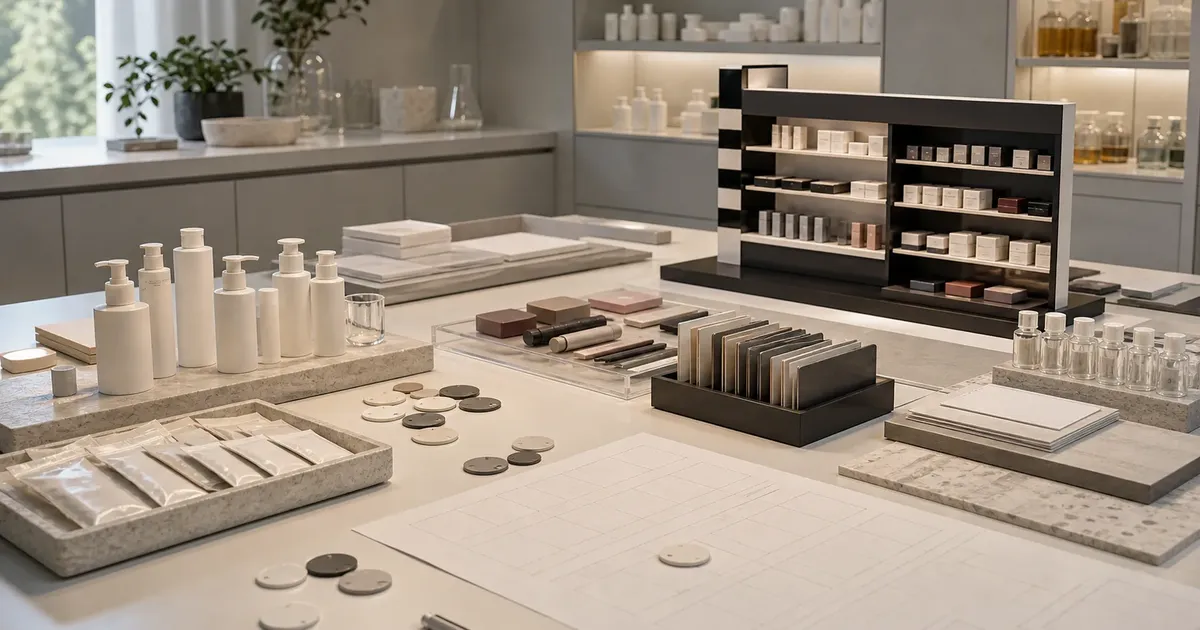
SHine Medical Consulting, Yatsen Group and Coppertone event sampling point to a practical beauty-operator shift: feedback is moving nearer to launch execution.
Share this report
Send it to a colleague or save the link for later.
This is the public read. The company report goes further.
A focused $299 report on one company or organization. Broader market, product, talent, and custom questions use the report options below.
$299
one report
One-company operating brief with the decision question and next actions
Company, hiring, and published market context where evidence exists
Source notes, caveats, and a plain-method note for major claims
Private report delivery through the owner-scoped workflow
No account needed — pay securely and SOCELLE will email you to collect the brief.
A fresh beauty brand-news cluster points to a practical operating shift: the market feedback loop is moving closer to the place where products, services, and channel decisions meet consumers.
What happened
The July 9 pulse grouped three signals that look different on the surface. Aesthetics Journal reported that SHine Medical Consulting is introducing focus groups (https://aestheticsjournal.com/news/shine-medical-consulting-introduces-focus-groups/) around ESG and sustainability, with the stated purpose of gathering real-world insight from professionals across the medical aesthetics market. Yatsen Group announced a partnership with Sephora China (https://www.prnewswire.com/news-releases/yatsen-group-announces-partnership-with-sephora-china-cementing-position-as-a-science-led-beauty-innovation-leader-302820586.html) to bring its flagship brand Perfect Diary into that retail channel. Page Six, covering Disney's Moana premiere at the Hollywood Bowl (https://pagesix.com/2026/07/08/hollywood/moana-premiere-takes-over-iconic-hollywood-bowl/), noted Coppertone among brands present at the event, passing out sunscreen.
This is not one clean product-launch story. It is a feedback story. One member sits inside professional aesthetics. One sits inside beauty retail expansion. One sits inside live consumer sampling at a mass-culture event. Together, they show how beauty businesses are trying to learn earlier, prove faster, and place products or messages in contexts where the response can be observed.
That matters because operators often treat these activities as separate teams: research over here, retail over there, events somewhere else. The market is less forgiving of that separation now. A focus group that does not change operating language is theater. A retail partnership without training and fixture readiness is exposure without proof. Event sampling without a plan for what was learned is just product movement.
Why it matters for operators
For beauty brands, medspa groups, aesthetics suppliers, and retail teams, the useful question is not whether focus groups, Sephora placement, or event sampling are new. They are not. The useful question is whether the feedback from those moments is being converted into launch discipline.
Related on SOCELLE
The live market connected to this report.
From the analysis into the live market — the roles hiring now and the companies active in Medspa, straight from the SOCELLE board.
01The July 9 brand-news cluster contains three signals: SHine Medical Consulting's focus groups, Yatsen Group's Sephora China partnership for Perfect Diary, and a Page Six event item mentioning Coppertone sunscreen sampling.
02SHine Medical Consulting described dedicated ESG and sustainability focus groups intended to gather real-world insight from medical aesthetics professionals.
03Yatsen Group announced a partnership to bring Perfect Diary to Sephora China.
Continue from this signal
Connect the report to the market.
Use the topic, hiring, and company paths below to keep moving from the analysis into the public SOCELLE graph.
Prepared with AI assistance by the SOCELLE Intelligence Desk from the publications cited in this report.
The intelligence digest
More reads like this, once a week
SOCELLE Intelligence Desk analysis delivered quietly every Monday — the signals that moved, the market reads worth holding, the moves other operators are making.
Free. No spam. Unsubscribe anytime. We use your details per our Privacy Policy and never sell them.
Start with the SHine Medical Consulting item. ESG and sustainability language can become vague quickly, especially in medical aesthetics, where clinics and suppliers have to balance patient trust, material choices, waste, regulatory caution, and commercial pressure. A focus group can help only if the output is operational: what language professionals actually understand, what objections appear, which claims need evidence, where staff need training, and what tradeoffs buyers will accept. If the feedback stops at a recap deck, the operator has not changed the business.
For clinics and medspa suppliers, this creates a practical checklist. Before adding sustainability language to a service, device, consumable, or vendor story, operators should know which proof exists, which claims belong in staff training, and which statements should stay out of patient-facing copy. The strongest use of professional feedback is not to make a claim sound better. It is to make the claim safer, clearer, and more useful in the room.
The Yatsen and Sephora China signal sits in a different channel, but the same loop applies. A retail partnership can raise visibility for Perfect Diary, but visibility is only the first layer. The operating questions are fixture-level and staff-level: what product story can a beauty advisor explain quickly, which hero items fit the channel, how the brand handles science-led positioning, what shoppers compare it against, and how store feedback moves back to product, education, and inventory decisions. Retail distribution should be treated as a learning system, not only a badge.
The Coppertone sampling cue at an entertainment premiere is smaller, but it is still useful. Sunscreen at an outdoor or event-adjacent cultural moment can meet consumers when the product category is contextually relevant. The operator risk is assuming that relevance equals learning. A sampling team should know what it wants to observe: whether the context improves trial, whether the packaging or instructions are understood quickly, whether staff need a simpler script, and whether the moment produces useful follow-up audiences or only one-time distribution.
The thread across all three signals is that feedback has to move through the organization. Beauty operators should be asking:
– What decision will this focus group, retail launch, or sampling moment change?
– Which claim, script, training asset, fixture, or product bundle will be revised after feedback comes in?
– Who owns the loop from field input to channel adjustment?
– What evidence is strong enough for consumer-facing copy, and what should remain internal?
– How will the team avoid confusing attention with confirmed demand?
That last point matters for SOCELLE's own standards. These signals do not prove a demand trend. They do not show sell-through, conversion, or sustained consumer behavior. They show market-facing activity that operators can turn into better evidence if they design the loop properly.
What to watch
Through Q3 2026, watch whether more beauty partnerships are announced with explicit professional input, channel-learning language, or event-context sampling attached. Also watch whether sustainability, science-led beauty, and sunscreen or skin-protection messages are being tested in places where staff and consumers can respond, not only in campaign assets.
The operator advantage will sit with teams that treat feedback as infrastructure. For related SOCELLE reads, compare this with the retail-control signal in Quadpack, Next and Louis Vuitton Show Luxury Beauty Control (/intelligence/reports/quadpack-next-louis-vuitton-luxury-beauty-control) and the service-design signal in Beauty References Are Getting More Specific in Salons and Hotels (/intelligence/reports/beauty-reference-friction-salons-hotels).
SOCELLE publishes market & industry information, not medical, clinical, or professional advice. Always consult a qualified professional before making health, treatment, or business decisions.
Bruce Tyndall— Analyst of Record. 13+ years in beauty and wellness marketing leadership — Estée Lauder, Wella, Kevin Murphy, Naturopathica. Principal Consultant. LinkedIn.