This is the public read. The company intelligence brief goes further.
The public compatibility offer for the $299 Company tearsheet in Report Studio. Wider market, product, talent, and custom questions use the typed report catalog.
$299
one report
One-company operating brief with the decision question and next actions
Company, hiring, and published market context where evidence exists
Source notes, caveats, and a plain-method note for major claims
Private report delivery through the owner-scoped workflow
Scope is confirmed and sources are reviewed before anything is charged.
Beauty retail teams are entering a promotion cycle where the harder work is not getting attention, but keeping discount value, shelf story and staff explanation aligned once shoppers arrive.
What happened
Allure's Nordstrom Anniversary Sale beauty coverage put prestige beauty deal curation back into the center of the July shopping calendar, with the story framed around beauty products editors would still value outside the markdown period. The signal matters because the sale is not just a clearance cue for consumers. It is a moment when beauty retailers compress skincare, makeup, fragrance, hair tools and giftable sets into a short decision window.
At the same time, KATE, the global makeup brand from Kao Corporation, launched its KABUKE: Break Convention international campaign. The campaign centers on Kabuki-inspired shadow expression and the brand's makeup language for individuality and self-expression. That is a different kind of attention engine from a sale, but it creates a similar operating question: can the consumer-facing story travel from campaign asset to product shelf to advisor explanation without losing its meaning?
The cluster is small, but the operator read is useful. One signal is promotion-led retail demand. The other is culture-led makeup positioning. Together they show beauty traffic becoming more layered. A customer may arrive because a sale guide surfaced a product set, because a campaign made a makeup look more legible, or because both cues are circulating at once. The floor team still has to translate that interest into a clean recommendation.
Why it matters for operators
For beauty retailers, spas with retail walls, salons selling home-care products and medspa front desks, sale traffic is only useful if the offer has a clear job. A markdown can introduce a client to a routine, move a gift set, test a higher-ticket tool or defend share against another retailer. Those are different operating intents. If the team treats every discounted item as the same kind of deal, the customer receives price noise instead of product logic.
Evidence and answers
Structured for quick review.
Key claims
01Beauty promotion is moving from a discount event into an operating test of merchandising, staff language and brand-position control.The cluster combines a major sale-beauty signal with an international makeup campaign signal.
02Operators should plan promotion scripts before traffic arrives.Sale bundles and campaign-led makeup stories both require advisors to explain value without overstating product effects.
Continue from this signal
Connect the report to the market.
Use the topic, hiring, and company paths below to keep moving from the analysis into the public SOCELLE graph.
Prepared with AI assistance by the SOCELLE Intelligence Desk from the publications cited in this report.
SOCELLE publishes market & industry information, not medical, clinical, or professional advice. Always consult a qualified professional before making health, treatment, or business decisions.
Bruce Tyndall— Analyst of Record. 13+ years in beauty and wellness marketing leadership — Estée Lauder, Wella, Kevin Murphy, Naturopathica. Principal Consultant. LinkedIn.
The intelligence digest
More reads like this, once a week
SOCELLE Intelligence Desk analysis delivered quietly every Monday — the signals that moved, the market reads worth holding, the moves other operators are making.
Free. No spam. Unsubscribe anytime. We use your details per our Privacy Policy and never sell them.
The Nordstrom signal should push operators to separate promotion architecture before merchandising goes live. Which sets are meant to build a routine? Which products protect loyalty by letting existing clients restock? Which offers are simply seasonal traffic capture? Which categories need an advisor to explain usage boundaries? Those questions matter because beauty products often sit next to implied results. Staff should be able to describe texture, category role, finish, routine placement and value without drifting into unsupported claims.
KATE's campaign signal adds a second layer. Makeup campaigns that draw from cultural references can create stronger identity and visual memory, but they also demand better localization. A campaign built around shadow, expression and Japanese aesthetics cannot be reduced to a generic display phrase. Operators carrying makeup need a script that turns campaign language into usable shopping language: what part of the face the product is meant to define, what look it supports, how it compares with existing color stories and where the product belongs in a client's routine.
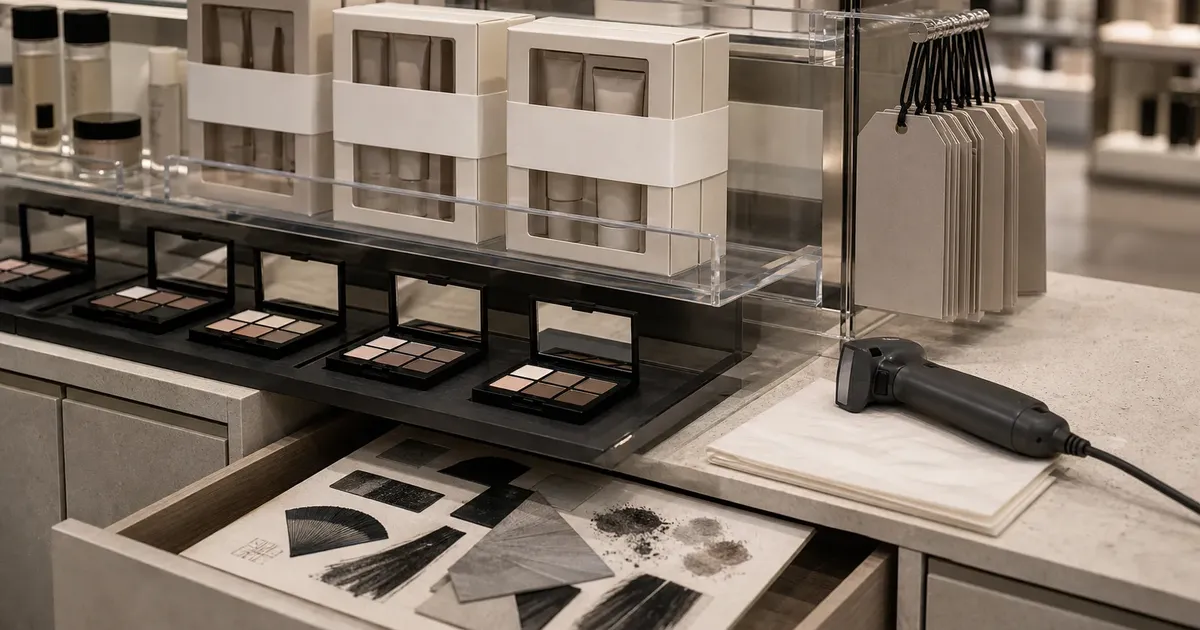
This is where promotion and campaign planning meet. The team cannot rely on a discount tag to do the selling, and it cannot rely on campaign imagery to explain product fit. A retailer that runs sale sets beside a campaign-led makeup launch needs a merchandising hierarchy: hero products at eye level, replenishment products near routine builders, testers or samples where allowed, and staff notes that distinguish value from urgency. The same discipline applies to smaller operators. A salon can promote a retail bundle around color maintenance while still protecting professional authority. A spa can feature skincare sets while making clear that the sale is about routine support, not a promise of a clinical outcome.
The margin issue is practical. Beauty operators often view sale periods as traffic opportunities, but traffic without script discipline can train clients to wait for markdowns. The better use is to make the sale a structured discovery period: introduce a client to a category, capture preference data, explain how the product works with services already booked, and follow up after the promotion ends. That turns a short event into a cleaner client file.
There is also a brand-risk issue. KATE's campaign shows how global makeup brands are still investing in distinctive identity systems. When those campaigns reach local retail, weak execution can flatten the story into decoration. Strong execution keeps the campaign specific enough to support product education, but restrained enough to avoid overclaiming or cultural shorthand that staff cannot explain.
For SOCELLE's operator reader, the action is simple: build the promotion brief before building the display. The brief should name the commercial goal, the products included, the customer use case, the phrases staff can safely use, the claims staff should avoid, and the follow-up path after the sale window.
What to watch
– Through August 9, watch which prestige beauty sale sets remain visible and which disappear quickly; sell-through pressure can reveal where consumers accept higher-ticket value framing.
– Watch whether KATE's international campaign is localized through product education, retailer displays or creator content across Asian markets.
– Watch whether beauty retailers separate routine-building bundles from urgent markdown language in email, site merchandising and store signage.
– Watch whether smaller operators borrow sale behavior without building the staff notes needed to protect margin and trust.
Promotion can create the first click or store visit. The operating advantage comes from what the team says next, how the shelf supports it and whether the customer leaves understanding more than the discount.