Cosmetic dermatology research turns toward measured protocols
AI-assisted briefJun 18, 2026/4 min read
Cited sources: 6 · Updated Aug 2, 2026
A new cosmetic-dermatology research cluster points to a more measurement-led operating environment for medspas, clinics, and treatment-driven beauty businesses.
Share this report
Send it to a colleague or save the link for later.
This is the public read. The company intelligence brief goes further.
The public compatibility offer for the $299 Company tearsheet in Report Studio. Wider market, product, talent, and custom questions use the typed report catalog.
$299
one report
One-company operating brief with the decision question and next actions
Company, hiring, and published market context where evidence exists
Source notes, caveats, and a plain-method note for major claims
Private report delivery through the owner-scoped workflow
Scope is confirmed and sources are reviewed before anything is charged.
Cosmetic dermatology research is getting more specific, and that matters commercially. A June 18, 2026 cluster in SOCELLE Intelligence (https://www.socelle.com/intelligence) pulled together new Journal of Cosmetic Dermatology papers on tattoo-removal lasers, facial rosacea laser treatment, fibroblast-targeting topicals, hair-restoration response markers, and objective wrinkle assessment after botulinum toxin treatment, alongside fresh expert-review content from the Journal of Drugs in Dermatology. Read together, the signal is not that one new treatment has won. It is that medspa and clinic operators are moving into a more measurement-led, protocol-specific environment where documentation, expectation-setting, and service design matter more than broad rejuvenation language.
What happened
The top cluster this hour was a research-heavy `science` group rather than a single brand or retailer story. Its strongest members all pointed to cosmetic-dermatology content published on June 18, 2026, with a concentration around treatment parameters, treatment response, and objective assessment.
The Wiley-hosted Journal of Cosmetic Dermatology entries alone covered several distinct lanes. One paper focused on the efficacy of Nd:YAG lasers for tattoo removal and framed the topic through clinical outcomes, clearance rates, and treatment parameters. Another centered on clinical outcomes of 532 nm long pulse laser treatment for facial rosacea. A separate review examined topical therapies targeting dermal fibroblasts in skin aging and rejuvenation. The hair category was present too, with a paper on hair number per follicular unit as a marker of treatment response in male androgenetic alopecia. The cluster also included a validation paper on AURA-W, described in the title as a 3D imaging system for objective wrinkle assessment after botulinum toxin treatment.
JDD added a parallel expert-review signal through JDD Re:View With Dr. Beer. Even without overextending beyond the title, its presence matters because it shows the research conversation is not staying trapped in static journal pages. It is also being translated into a more digestible expert-review layer that can travel faster into clinic conversations, vendor messaging, and provider education.
Related on SOCELLE
The live market connected to this report.
From the analysis into the live market — the roles hiring now and the companies active in Medspa, straight from the SOCELLE board.
01The current cosmetic-dermatology signal cycle is emphasizing protocol-specific evidence across multiple treatment categories.The cluster spans tattoo-removal lasers, rosacea laser treatment, topical fibroblast-targeting therapies, hair-restoration response markers, wrinkle-assessment imaging, and expert review content rather than one generalized aesthetics theme.
02Objective measurement is moving closer to the commercial center of premium medspa operations.The wrinkle-assessment imaging paper and the broader focus on treatment parameters and response markers suggest clinics will be pushed toward more disciplined documentation and result framing.
Continue from this signal
Connect the report to the market.
Use the topic, hiring, and company paths below to keep moving from the analysis into the public SOCELLE graph.
SOCELLE Intelligence Desk analysis delivered quietly every Monday — the signals that moved, the market reads worth holding, the moves other operators are making.
Free. No spam. Unsubscribe anytime. We use your details per our Privacy Policy and never sell them.
This is what makes the cluster useful. These are not interchangeable aesthetics headlines. They point to a research cycle that is getting more exact about which modality, which parameter set, which marker, and which assessment method is being discussed.
Why it matters for operators
This is the most important section, because operators should not read this as an academic curiosity. They should read it as a clue about where the commercial standard is heading.
First, consultations are likely to become more evidence-shaped. When journals and review formats increasingly emphasize treatment parameters, response markers, and objective assessment, clients eventually hear some version of that language. That affects how premium clinics explain services, compare options, and frame expected timelines. The operational question is not whether every medspa needs to sound like a journal club. It is whether the business can translate research precision into clearer consultation flow, more disciplined charting, and tighter client education.
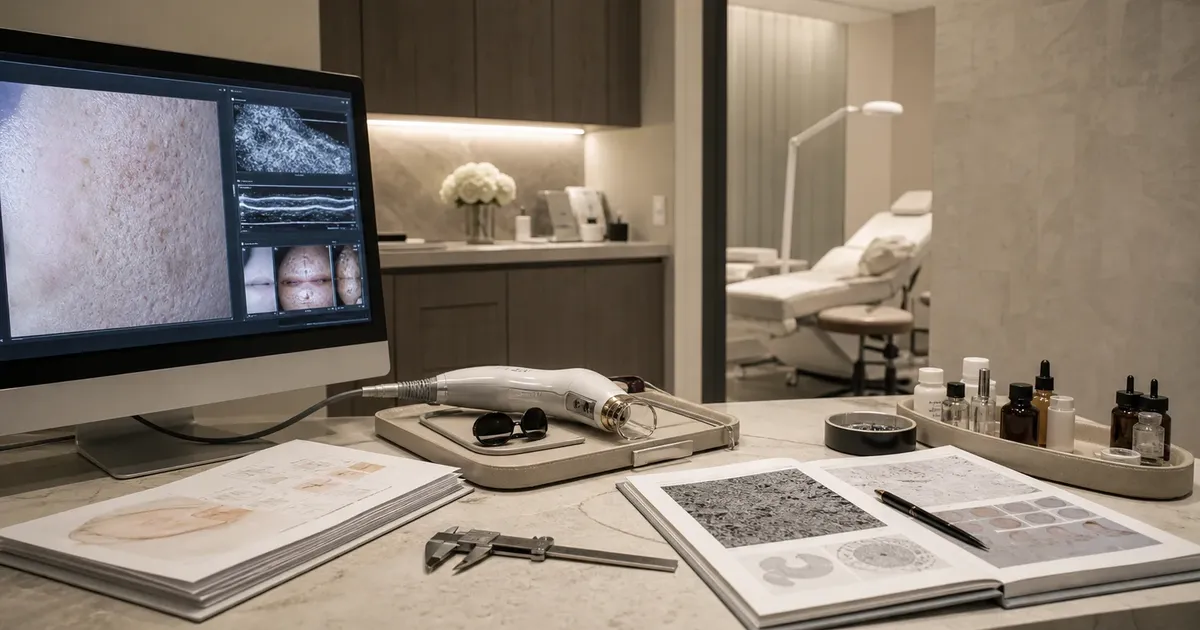
Second, imaging and structured documentation are gaining strategic weight. The AURA-W paper stands out because it is explicitly about objective wrinkle assessment after botulinum toxin treatment. That does not mean operators should start making inflated technology claims. It does mean the market is continuing to reward clinics that can show consistent before-and-after logic, standardized intake, and more credible progress tracking. In competitive premium markets, documentation quality is becoming part of brand quality.
Third, laser businesses may face more informed comparison shopping. When fresh titles surface around Nd:YAG tattoo removal efficacy and 532 nm long-pulse rosacea outcomes, they reinforce a trend toward modality-specific consumer and provider interest. Operators do not need to turn public-facing copy into technical jargon, but they do need staff who can explain why a service is structured the way it is, what variables matter, and where the limits of the conversation are. The commercial risk is not a lack of sophistication. It is overselling simplified claims while the research language around the category becomes more exact.
Fourth, treatment-led retail and topical adjacencies may also become more scrutinized. A mechanistic review focused on dermal fibroblasts and skin aging suggests that topical rejuvenation language will keep getting more science-coded. For operators, that changes merchandising and service bundling. If a clinic or brand pairs procedures with skincare, the support products, handouts, and post-treatment education increasingly need a coherent rationale. Vague promises read weaker when the broader market conversation is sharpening.
Fifth, hair-restoration operators should watch outcome framing closely. The paper on hair number per follicular unit as a treatment-response marker is a reminder that hair services are also being pulled toward more measurable language. That affects photography standards, progress reviews, membership models, and how success is described during retention conversations.
The broader commercial takeaway is simple: premium aesthetics businesses are being nudged away from generic transformation storytelling and toward better operational proof. That proof can show up in charts, images, protocols, education materials, and more careful wording. It does not require clinical advice in editorial or marketing copy. It requires discipline.
What to watch
Watch for more vendors, trainers, and clinic educators to lean harder on objective assessment, parameter-specific language, and protocol comparison over the next quarter. If that happens, operators will need stronger internal standards for how results are documented and discussed.
Watch for medspa consultation workflows to absorb more imaging, structured review, and longitudinal tracking, especially in wrinkle, laser, and hair categories. The businesses that do this well will likely present it as clarity and continuity, not gadget theater.
Watch the gap between credible evidence-led messaging and inflated treatment marketing. As research titles become more specific, the operators that win trust will be the ones that stay precise without drifting into unsupported promises.
The signal here is not a single breakthrough. It is a shift in tone. Cosmetic dermatology is broadcasting a more measured operating brief, and medspas that adapt early will be better prepared for a market that increasingly expects proof, not just polish.
Prepared with AI assistance by the SOCELLE Intelligence Desk from the publications cited in this report.
SOCELLE publishes market & industry information, not medical, clinical, or professional advice. Always consult a qualified professional before making health, treatment, or business decisions.
Bruce Tyndall— Analyst of Record. 13+ years in beauty and wellness marketing leadership — Estée Lauder, Wella, Kevin Murphy, Naturopathica. Principal Consultant. LinkedIn.