Dua Lipa's bridal manicure points to softer beauty demand
AI-assisted briefJun 20, 2026/4 min read
Cited sources: 6 · Updated Aug 2, 2026
A soft-pink celebrity bridal nail moment, creator-channel fatigue, and mass haircare launches all point to a quieter beauty consumer: specific, price-aware, and proof-led.
Share this report
Send it to a colleague or save the link for later.
This is the public read. The company intelligence brief goes further.
The public compatibility offer for the $299 Company tearsheet in Report Studio. Wider market, product, talent, and custom questions use the typed report catalog.
$299
one report
One-company operating brief with the decision question and next actions
Company, hiring, and published market context where evidence exists
Source notes, caveats, and a plain-method note for major claims
Private report delivery through the owner-scoped workflow
Scope is confirmed and sources are reviewed before anything is charged.
Dua Lipa's soft-pink bridal manicure is a useful beauty demand signal because it sits inside a wider consumer pattern: shoppers still notice celebrity moments, but they are deciding through proof, creator trust, price sensitivity, and practical routines.
What happened
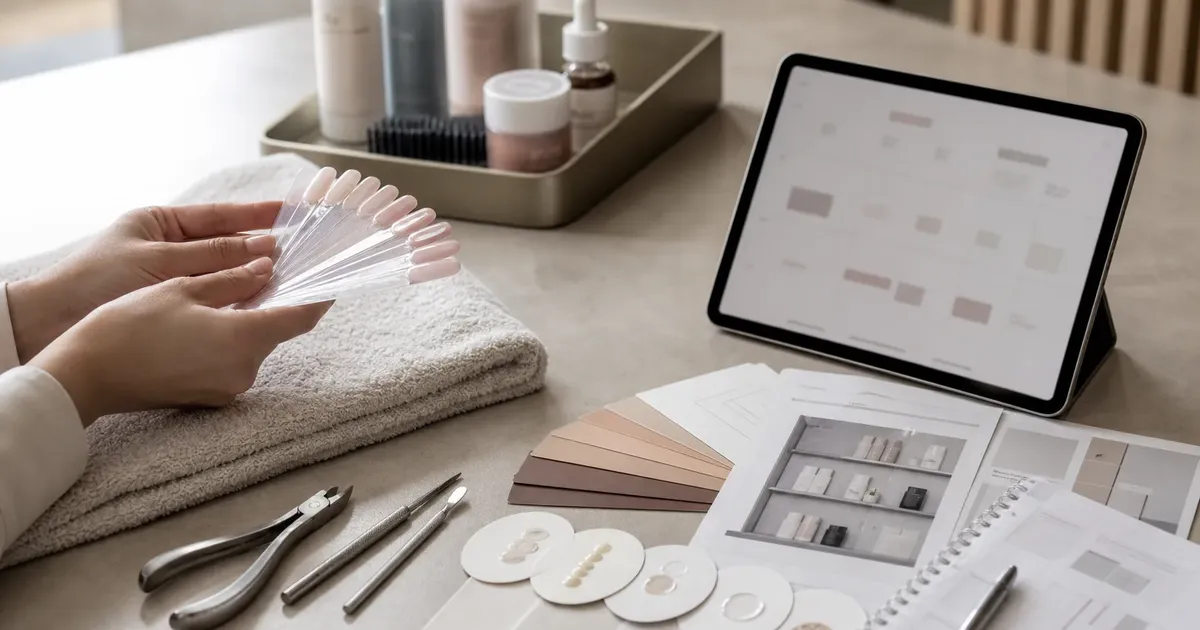
Vogue reported (https://www.vogue.com/article/dua-lipa-bridal-manicure-sicily) that Dua Lipa chose elegant soft-pink nails with Chanel haute couture for her Sicily wedding to Callum Turner. The beauty read is clear: not maximal bridal art, not novelty color, but a wearable finish that can move from celebrity coverage into salon requests quickly because it is easy for clients to imagine on their own hands.
That story landed beside a set of beauty-audience signals that point in the same direction. On r/BeautyGuruChatter, users discussed e.l.f.'s move into haircare (https://www.reddit.com/r/BeautyGuruChatter/comments/1u942g4/elf_now_has_haircare/), framing the launch around accessible pricing and the risk of products selling out. Other threads asked whether familiar beauty-content channels are still active, including Bailey Sarian (https://www.reddit.com/r/BeautyGuruChatter/comments/1u9nyxd/does_bailey_sarian_still_do_her_makeup_murder/) and Beauty News (https://www.reddit.com/r/BeautyGuruChatter/comments/1u9mkd1/is_beauty_news_gone_again/). Separate discussion around Patrick Ta and technique attribution (https://www.reddit.com/r/BeautyGuruChatter/comments/1u8tq7n/robert_welsh_made_a_great_video_on_why_what/) shows that audiences are not only asking what to buy; they are asking who gets credit, who is credible, and whether a trend has a clean origin story.
The cluster also includes r.e.m. beauty lip balm chatter (https://www.reddit.com/r/BeautyGuruChatter/comments/1u7yu8r/ariana_grande_talking_about_rem_beautys_new_lip/), reinforcing the same operator issue: celebrity can still start attention, but the purchase path now has to survive community scrutiny.
Why it matters for operators
For salons, the manicure signal is commercial because it is specific enough to sell and broad enough to repeat. A soft-pink bridal finish can be packaged as a service menu item without leaning on a celebrity name: sheer pink consultation, nail-shape edit, cuticle finish, durability planning, event-week repair slot, and retail aftercare. The opportunity is not copying one person. It is turning a high-visibility moment into an occasion-ready service protocol.
Continue from this signal
Connect the report to the market.
Use the topic, hiring, and company paths below to keep moving from the analysis into the public SOCELLE graph.
SOCELLE Intelligence Desk analysis delivered quietly every Monday — the signals that moved, the market reads worth holding, the moves other operators are making.
Free. No spam. Unsubscribe anytime. We use your details per our Privacy Policy and never sell them.
That matters because today's beauty consumer is tired of vague trend language. A client does not need another caption saying quiet luxury, clean girl, or bridal glow. She needs to know which finish fits her skin tone, which length works with her event schedule, what maintenance looks like, and how the salon will prevent the service from looking flat in photos. Operators should train front-desk and nail teams to translate the look into choices: sheer versus milky, oval versus short square, cool pink versus beige pink, gel versus lacquer, and one appointment versus a pre-event trial.
For beauty retailers and brand partners, the e.l.f. haircare signal says affordability is still a major filter. The Reddit discussion is not a formal market survey, but the language is useful: shoppers are noticing category expansion when it gives them a lower-entry version of a routine they already understand. Salons and spas should treat that as a merchandising cue. Haircare, nail aftercare, lip balm, and hand care can sit beside service moments when the recommendation is tied to a practical use case rather than a product wall.
For medspas and premium service businesses, the creator-channel discussion is a warning about borrowed trust. If a practice depends on one influencer, one tutorial format, or one branded technique story, attention can disappear or turn into an attribution dispute quickly. The better operating model is owned proof: before-and-after language that stays compliant, practitioner notes, ingredient rationale, treatment-room education, and clear source attribution when a technique is inspired by another artist or educator. Market information, not clinical, legal, or business advice, but the trust pattern is moving toward traceability.
This is also a content planning issue. The cluster shows three content modes moving at once: celebrity event beauty, community audit of creators, and value-led product discovery. Operators should not post all three as separate noise. They should build one calendar around client decisions: wedding-week nails, summer haircare swaps, lip prep, creator-inspired technique credits, and service maintenance. That gives every post a job.
What to watch
– Whether soft pink, milky pink, and sheer bridal finishes rise in salon booking language over the next two weeks.
– Whether e.l.f.'s haircare move pulls more makeup-first brands into shampoo, conditioner, oil, and styling-adjacent shelves.
– Whether creator attribution disputes push brands and salons to credit technique educators more explicitly.
– Whether celebrity lip and nail moments convert better when paired with practical aftercare rather than broad trend copy.
The next operator advantage is not faster trend chasing. It is sharper translation: take the visible beauty moment, remove the noise, and turn it into a service, shelf, and proof system clients can understand.
Prepared with AI assistance by the SOCELLE Intelligence Desk from the publications cited in this report.
SOCELLE publishes market & industry information, not medical, clinical, or professional advice. Always consult a qualified professional before making health, treatment, or business decisions.
Bruce Tyndall— Analyst of Record. 13+ years in beauty and wellness marketing leadership — Estée Lauder, Wella, Kevin Murphy, Naturopathica. Principal Consultant. LinkedIn.