Laura Mercier Shows Why Beauty Price Needs Counter Proof
AI-assisted briefJul 2, 2026/4 min read
Cited sources: 2 · Updated Aug 2, 2026
A Laura Mercier in-store complexion story and an adjacent $500 device review point to the same pricing reality: shoppers need tactile proof before they accept a higher ticket.
Share this report
Send it to a colleague or save the link for later.
This is the public read. The company intelligence brief goes further.
The public compatibility offer for the $299 Company tearsheet in Report Studio. Wider market, product, talent, and custom questions use the typed report catalog.
$299
one report
One-company operating brief with the decision question and next actions
Company, hiring, and published market context where evidence exists
Source notes, caveats, and a plain-method note for major claims
Private report delivery through the owner-scoped workflow
Scope is confirmed and sources are reviewed before anything is charged.
Laura Mercier's latest counter-service moment is a reminder that beauty pricing is easier to defend when the shopper can test the proof in person: shade, texture, finish, routine fit, and the reason one more product belongs in the basket.
What happened
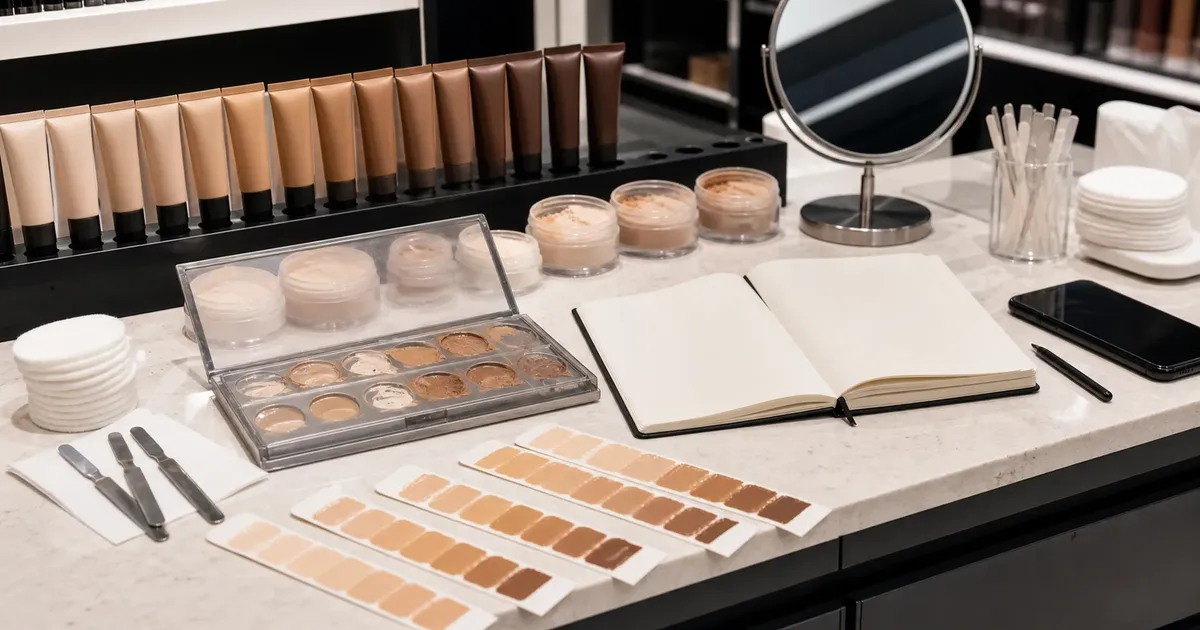
Allure's July 1 Counter Service feature followed a Laura Mercier base-makeup visit inside Sephora, where the purchase logic was not built around one hero SKU. The editor moved through a fuller complexion routine: Pure Canvas Illuminating Primer, Tinted Moisturizer Natural Dewy, Secret Camouflage Complexion Perfector, Ultra-Blur Translucent Loose Setting Powder, and Secret Brightening Under Eye Powder. The useful signal for operators is the role of the physical counter. Shade matching happened on the jawline. Powder texture could be felt. The concealer palette's warm and cool adjustment pans made more sense when tested against real skin under retail lighting.
The same pulse cluster also included an adjacent pricing signal outside beauty: AndroidGuys reviewed the Moto G Stylus 2026 as a device moving closer to the premium end of the midrange phone market. The review points to a roughly $500 price point and frames the value case around features a buyer can understand: an active stylus, a bright AMOLED display, water resistance, faster charging, and storage expansion, alongside concerns about the higher price and recycled processor.
Read together, the two sources are not saying beauty should act like consumer electronics. They are saying shoppers are applying the same value discipline across categories. If the price is higher, the proof has to be concrete.
Why it matters for operators
For beauty retailers, complexion is one of the clearest places where price proof still benefits from the room. Online shade finders and product reviews help, but they do not fully replace the moment when a shopper sees a tint against their jawline, feels whether a powder turns flat, or understands why a concealer palette has tone-adjustment pans instead of one fixed shade. That is not nostalgia for old retail. It is commercial infrastructure.
Evidence and answers
Structured for quick review.
Key claims
01Complexion pricing is easier to defend when the shopper can compare shade, finish, texture, and routine fit in the store.The Allure counter-service story centers on an in-person Laura Mercier Sephora visit where shade matching, tester access, and routine-building shaped the purchase decision.
02Mid-market price increases require visible functional proof across categories.The AndroidGuys review frames the Moto G Stylus 2026 as a higher-priced midrange device whose active stylus, durability, screen, and charging features have to justify the roughly $500 ticket.
Continue from this signal
Connect the report to the market.
Use the topic, hiring, and company paths below to keep moving from the analysis into the public SOCELLE graph.
Prepared with AI assistance by the SOCELLE Intelligence Desk from the publications cited in this report.
SOCELLE publishes market & industry information, not medical, clinical, or professional advice. Always consult a qualified professional before making health, treatment, or business decisions.
Bruce Tyndall— Analyst of Record. 13+ years in beauty and wellness marketing leadership — Estée Lauder, Wella, Kevin Murphy, Naturopathica. Principal Consultant. LinkedIn.
The intelligence digest
More reads like this, once a week
SOCELLE Intelligence Desk analysis delivered quietly every Monday — the signals that moved, the market reads worth holding, the moves other operators are making.
Free. No spam. Unsubscribe anytime. We use your details per our Privacy Policy and never sell them.
The Allure story shows why a counter can turn a single-product need into a routine. The shopper arrived with a base-makeup problem and left with a connected set of products that handled prep, tint, coverage, setting, and brightening. For operators, that is the difference between selling a complexion item and building a basket with logic. The display did part of the work because the products were merchandised as a system, not a scattered set of units.
This matters for pricing because mid-market and prestige beauty are exposed when they ask for more money without making the added value legible. A tinted moisturizer can justify itself through shade confidence and finish. A powder can justify itself through texture and wear logic. A concealer palette can justify itself through flexibility across tone changes, but only if a shopper understands how to use the smaller pans. Staff training, tester hygiene, shade cards, mirrors, lighting, and product adjacency all become part of the price argument.
The Motorola signal sharpens the same point from the outside. A $500 device is not automatically rejected if the shopper sees utility. But the review also shows that higher prices invite scrutiny: what changed, what stayed the same, and whether the added features are enough. Beauty operators should assume their customers are making similar comparisons inside the store. If a primer, tint, concealer, powder, and brush create a higher basket, the advisor needs to explain the sequence plainly and tie each step to a visible outcome.
For brands, this argues for tighter counter architecture. Do not leave complexion education entirely to packaging copy or social content. Build displays that make route-finding easy: prep, tint, correct, set, finish. Give advisors language for humid weather, skin sensitivity, shade uncertainty, and texture preference without making medical claims. Offer mini routines or trialable sets where the full-size basket feels like too much risk. Track which products are added after shade matching versus bought alone online; that split will show where counter proof is doing real work.
For salons, spas, and medspa-adjacent retailers, the same principle applies to take-home beauty. A post-service retail recommendation should not feel like an extra charge tacked onto the appointment. It should feel like a continuation of what the client just learned: why this finish, why this shade, why this tool, why this step now. When the proof is tactile and specific, the price discussion becomes calmer.
What to watch
Watch whether prestige complexion brands invest more in in-store shade navigation, not only campaign imagery. Watch whether Sephora-style displays make routine sequencing clearer as brands defend bigger baskets. Watch whether more editorial beauty coverage returns to counter visits, because that can signal renewed consumer appetite for guided retail after several years of digital-first discovery.
Also watch adjacent categories. If consumers keep rewarding products that make higher prices tangible through utility, beauty operators should expect the same standard at the shelf. The winning counter will not be the prettiest one. It will be the one that makes the shopper confident enough to pay for the full routine. For broader operator context, follow SOCELLE's ongoing /intelligence (/intelligence) coverage. This is market information, not clinical, legal, or business advice.