Nail Clients Are Asking for Product Proof and Price Clarity
AI-assisted briefJun 22, 2026/4 min read
Cited sources: 8 · Updated Aug 2, 2026
Fresh nail threads show clients comparing gel quality, finish durability, service safety, and price logic while beauty brands move deeper into creator-led retail.
Share this report
Send it to a colleague or save the link for later.
This is the public read. The company intelligence brief goes further.
The public compatibility offer for the $299 Company tearsheet in Report Studio. Wider market, product, talent, and custom questions use the typed report catalog.
$299
one report
One-company operating brief with the decision question and next actions
Company, hiring, and published market context where evidence exists
Source notes, caveats, and a plain-method note for major claims
Private report delivery through the owner-scoped workflow
Scope is confirmed and sources are reviewed before anything is charged.
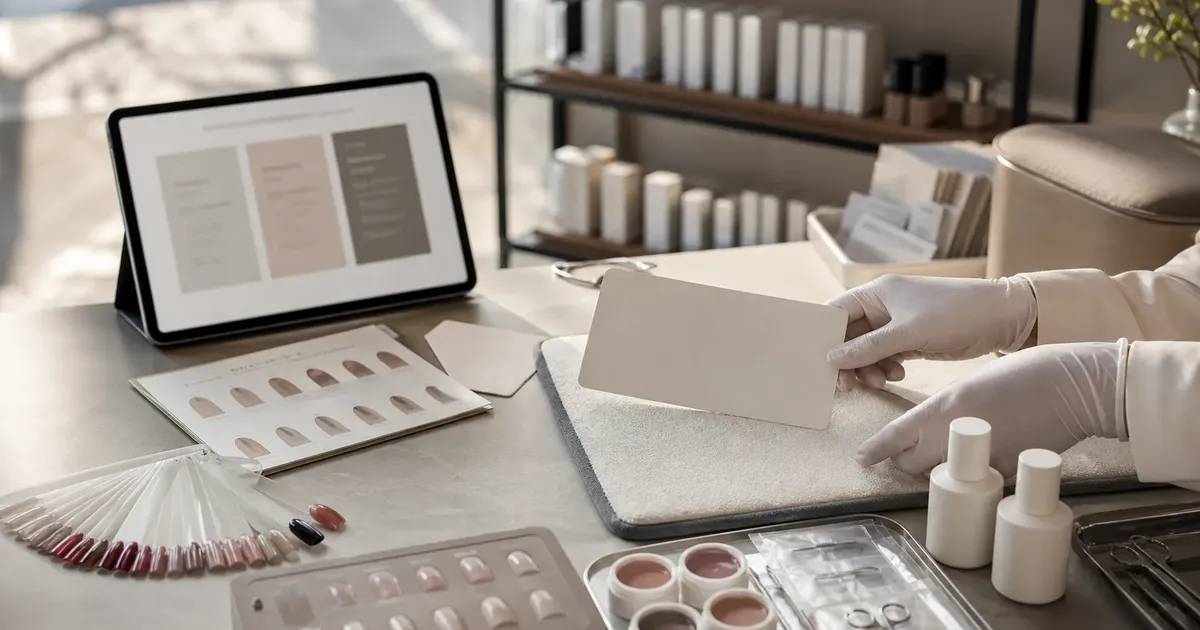
Nail clients are increasingly treating product choice, application quality, and price logic as part of the service, not as backstage details handled only by the technician.
What happened
A fresh cluster of nail conversations shows clients asking more specific questions before and after appointments. One beginner nail technician asked peers for better gel polish, base coat, primer, and top coat recommendations after using entry-level systems. Another consumer posted about buying a DND shade during a sale and named the color as part of the appeal, showing how retail product discovery feeds nail-service expectations.
The trust side of the conversation is sharper. One client described a set that looked acceptable in the salon but later felt rough and visibly uneven. Another asked whether a gap between a Gel-X extension and the natural nail warranted returning to the salon, with concern about moisture build-up. A separate client new to gel nail services asked why local salons list the same broad service from $25 to $70 and whether different tools or techniques explain the spread.
The cluster also includes high-expression nail art and beauty retail signals. A DIY rainbow trout nail-art thread shows consumers learning technique language, including magnetic polish, jelly striping, and liner-brush detail. Glossy reported that Polite Society is using Ulta Beauty's TikTok Shop for a large affiliate campaign around its B.I.G. Mouth XL lip product, while Vogue's hair-loss nutrition article reflects the broader consumer habit of seeking expert-backed beauty guidance before purchase or service decisions.
Together, the signal is not simply that nails are popular. It is that customers are bringing retail-level product literacy and social proof expectations into salon appointments.
Why it matters for operators
For nail salons, the immediate operational risk is a widening gap between what the team knows and what the client can see. A technician may understand why one gel system costs more, why rubber base is or is not appropriate for a given nail, or why a top coat loses shine under certain wear conditions. If that reasoning is invisible, the client experiences the price as arbitrary and the service as harder to trust.
Continue from this signal
Connect the report to the market.
Use the topic, hiring, and company paths below to keep moving from the analysis into the public SOCELLE graph.
SOCELLE Intelligence Desk analysis delivered quietly every Monday — the signals that moved, the market reads worth holding, the moves other operators are making.
Free. No spam. Unsubscribe anytime. We use your details per our Privacy Policy and never sell them.
That means the consultation should carry more of the value. Salons do not need to turn every appointment into a lecture. They do need a compact way to explain product tiers, expected wear, prep standards, removal standards, and correction windows. A service menu that says "gel nail service" is no longer enough when clients are comparing pigment, consistency, base coat type, primer, finish durability, and art complexity in public forums.
The quality-control issue is equally important. Posts about rough finish, leaning designs, and extension gaps show that clients may not have the technical vocabulary to describe the problem, but they can still identify when confidence drops. Operators should give clients a plain path for raising concerns within a defined window: what counts as a fix, what counts as normal wear, what requires removal, and when the salon wants the client to return.
This is market information, not clinical, legal, or business advice. The useful operator move is to convert anxiety into process. A nail team can use a pre-service checklist for nail condition, length, extension fit, desired finish, art complexity, and aftercare expectations. That creates a record for the technician and a calmer experience for the client.
Pricing also needs cleaner framing. The $25-to-$70 question is a direct warning that clients see large ranges but not the cost architecture behind them. Labor time, product system, prep method, strengthening layer, extension type, art, repair policy, and technician experience can all affect price. If those drivers are not named, clients will compare only the headline number.
Beauty brands and retailers should read the same cluster as evidence that creator-led commerce is changing service-room behavior. When a brand seeds a product through affiliate creators or when editorial beauty content explains a concern through experts, customers learn to expect proof, context, and peer validation. The salon counter and the retail shelf now share the same trust economy.
For operators, the practical response is not to chase every viral product mention. It is to document the house standard: which gel systems are used, why they were chosen, what performance the salon will stand behind, and where a lower-cost or higher-cost service genuinely differs.
What to watch
– Whether nail salons add clearer product-system language to online menus before peak summer appointment demand.
– Whether Gel-X and structured gel services receive more visible correction policies as clients scrutinize extension fit.
– Whether creator-led beauty campaigns make clients more likely to ask for named products inside service businesses.
– Whether salons shift pricing pages from service names to tiered explanations of time, technique, finish, and guarantee.
The next competitive edge for nail operators is not just better color choice. It is the ability to make quality visible before the client has to ask.
Prepared with AI assistance by the SOCELLE Intelligence Desk from the publications cited in this report.
SOCELLE publishes market & industry information, not medical, clinical, or professional advice. Always consult a qualified professional before making health, treatment, or business decisions.
Bruce Tyndall— Analyst of Record. 13+ years in beauty and wellness marketing leadership — Estée Lauder, Wella, Kevin Murphy, Naturopathica. Principal Consultant. LinkedIn.