This is the public read. The company intelligence brief goes further.
The public compatibility offer for the $299 Company tearsheet in Report Studio. Wider market, product, talent, and custom questions use the typed report catalog.
$299
one report
One-company operating brief with the decision question and next actions
Company, hiring, and published market context where evidence exists
Source notes, caveats, and a plain-method note for major claims
Private report delivery through the owner-scoped workflow
Scope is confirmed and sources are reviewed before anything is charged.
Beauty operators are seeing compliance pressure move from legal departments into daily service and retail scripts, as fresh signals around trademarks, talc litigation, peptide compounding, licensing and fragrance refills point to the same operating problem: staff need cleaner language before a client question becomes a risk.
What happened
Global Cosmetics News reported an initial Louis Vuitton trademark ruling in China involving tea chain Molly Tea, framing the dispute as a wider debate over brand protection and shared cultural design references. The useful beauty read is not whether every operator faces a luxury-house lawsuit. It is that visual borrowing, packaging cues and service merchandising can become legal questions when a brand story depends on recognisable codes.
The same pulse included Global Cosmetics News coverage of a U.S. judge questioning evidence in Johnson & Johnson talc cancer litigation. That litigation sits far above a spa, salon or beauty-retail counter, but it still changes the room. Product-liability coverage teaches consumers to ask where ingredients came from, what was known, and whether staff can explain risk without sounding dismissive or defensive.
Glossy reported that the peptide pipeline received new legal momentum after FDA advisory committee activity. The FDA's own July 23-24 meeting notice lists several peptide-related bulk drug substances under discussion for the 503A Bulks List. For operators, that is a source-boundary issue. A wellness or clinic team may hear more peptide questions, but interest is not the same as approval, and a committee discussion is not a client-ready promise.
Two forum signals added the front-line texture: an esthetics license-transfer question and a fragrance refill-bottle question. One is professional mobility; the other is consumer handling. Both show how quickly a regulatory or product-design question can land in informal channels when official instructions are hard to parse.
Why it matters for operators
Related on SOCELLE
The live market connected to this report.
From the analysis into the live market — the roles hiring now and the companies active in Skincare, straight from the SOCELLE board.
SOCELLE Intelligence Desk analysis delivered quietly every Monday — the signals that moved, the market reads worth holding, the moves other operators are making.
Free. No spam. Unsubscribe anytime. We use your details per our Privacy Policy and never sell them.
The operator takeaway is that compliance cannot live only in a back-office folder. It has to show up in scripts, intake prompts, merchandising notes, consultation boundaries and escalation rules.
Beauty clinic and wellness operators should treat peptide interest as a language-control problem before it becomes a menu problem. Staff should be able to say what source they are relying on, what they cannot answer, and when a licensed clinical or legal review is required. That is different from offering medical advice, dosage guidance or broad claims about outcomes. SOCELLE's read here is market information, not clinical, legal or business advice.
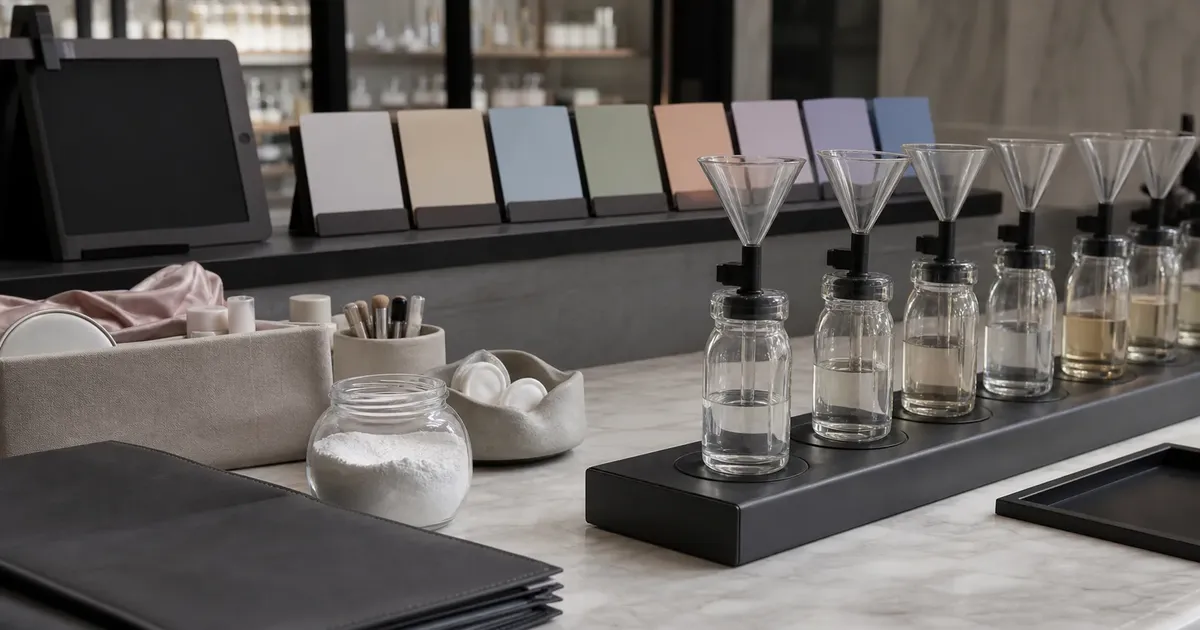
Beauty retail teams should review how product and refill systems are explained at the counter. A refill bottle that makes sense to a product team can still confuse a client who wants to decant, share or use it without the original vessel. That matters commercially because refillability is often positioned as a premium or sustainability cue. If the staff script cannot explain fit, safety, storage and intended use without improvising, the feature may create friction instead of trust.
Brand and merchandising teams should also revisit inspiration boards, service menus and product names. The Louis Vuitton signal is a reminder that visual references do not stay abstract once they enter packaging, signage, social creative or a retail fixture. Small operators rarely have luxury-house legal exposure, but they do have reputation exposure if a concept looks borrowed, culturally insensitive or too close to a protected brand cue.
Clinics, salons and schools should make licensing guidance boring and precise. When a practitioner asks whether a state transfer requires a practical exam, the right answer is not a peer guess dressed up as policy. It is a link to the relevant state board, a checklist date, and a clear boundary between experience-sharing and official requirements. That same habit protects client-facing conversations about credentials, scope and who is allowed to perform what.
The talc litigation signal belongs in product-risk response training. Operators do not need to litigate the science at the counter. They need a documented way to answer product-safety questions, route concerns to the manufacturer or source document, and avoid promising certainty that the source record does not support.
What to watch
Watch whether the FDA follows the advisory committee discussion with formal action on peptide-related bulk substances. Until then, operators should avoid treating the current attention cycle as a green light.
Watch whether beauty brands make refill instructions clearer in owned content and counter materials. Confusion around refill bottles is an avoidable education gap.
Watch whether trademark and product-liability coverage pushes more beauty teams to keep source files for packaging, claims and training language. The strongest operator response is not fear; it is repeatable evidence discipline inside the service room, retail counter and staff handoff.
Prepared with AI assistance by the SOCELLE Intelligence Desk from the publications cited in this report.
SOCELLE publishes market & industry information, not medical, clinical, or professional advice. Always consult a qualified professional before making health, treatment, or business decisions.
Bruce Tyndall— Analyst of Record. 13+ years in beauty and wellness marketing leadership — Estée Lauder, Wella, Kevin Murphy, Naturopathica. Principal Consultant. LinkedIn.