Travel-Ready Grooming Is Becoming a Beauty Service Cue
AI-assisted briefJul 1, 2026/4 min read
Cited sources: 5 · Updated Aug 2, 2026
A noisy pulse links travel grooming, social beauty talk, retail property movement, trade access, and local banking leadership into one operator signal.
Share this report
Send it to a colleague or save the link for later.
This is the public read. The company intelligence brief goes further.
The public compatibility offer for the $299 Company tearsheet in Report Studio. Wider market, product, talent, and custom questions use the typed report catalog.
$299
one report
One-company operating brief with the decision question and next actions
Company, hiring, and published market context where evidence exists
Source notes, caveats, and a plain-method note for major claims
Private report delivery through the owner-scoped workflow
Scope is confirmed and sources are reviewed before anything is charged.
Portable grooming is becoming a planning cue for spa, medspa, salon, and beauty retail teams because the same hour of signals connected travel grooming, social appearance readiness, retail property activity, trade access, and local banking leadership.
What happened
SOCELLE's top hourly treatment-trend cluster was not a clean single-topic beauty story. It was a five-member pulse that mixed consumer behavior with market infrastructure.
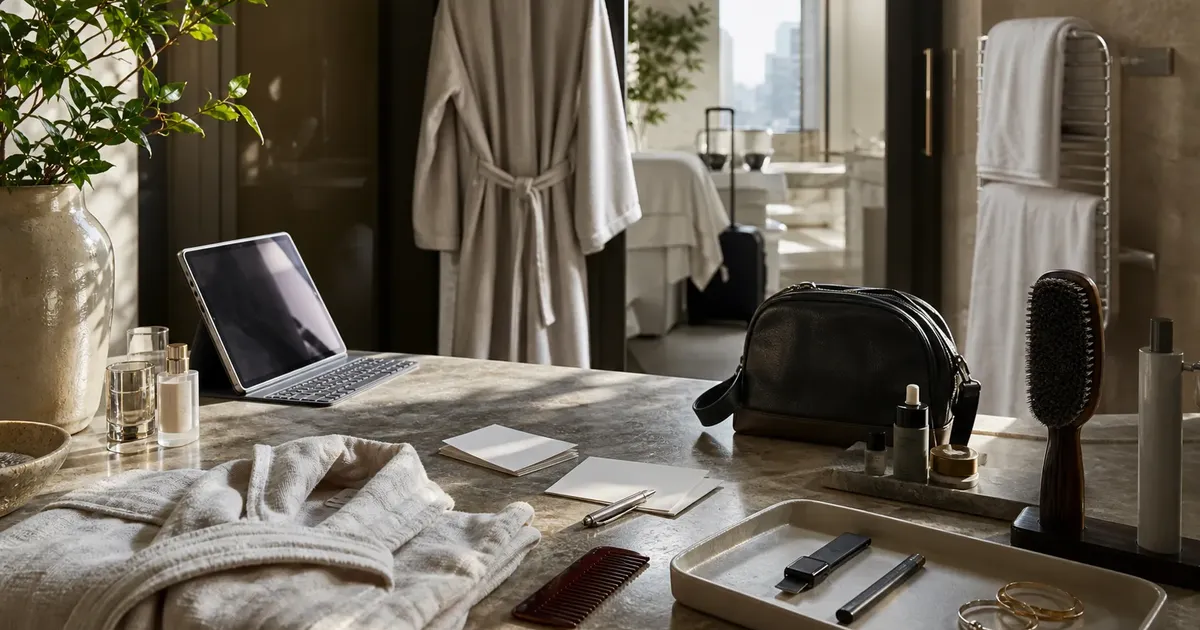
The strongest beauty-adjacent consumer source was Wellbeing Magazine's article on grooming choices for travelers moving through multiple destinations. Its practical frame was travel readiness: compact routines, grooming choices that hold up across changing locations, and the need to plan appearance care before the itinerary gets complicated.
Cup of Jo's dating-conversation piece was not a beauty article, but it surfaced a related social signal. The post's setup referenced first-date talk, social confidence, and the kinds of personal prompts people use when meeting someone new. For operators, the useful read is not the dating advice itself. It is that appearance, confidence, and conversation are increasingly bundled in consumer media around social readiness.
The remaining sources were weaker but commercially relevant. Brixmor Property Group reported second-quarter investment activity and acquisitions, which matters because neighborhood retail centers remain one of the places beauty services and small-format retail can test demand. Yonhap reported Guatemala's push to join the Korea-Central America Free Trade Agreement as a path to broader trade and Korean investment. First Horizon announced a Western North Carolina area president in its Mid-Atlantic region, a local capital signal rather than a beauty signal.
Taken together, the cluster says one thing clearly: portable grooming demand is not only about what sits in a toiletry bag. It touches where consumers travel, where they date and socialize, where they buy beauty goods, and which local markets have enough commercial support to test new service bundles.
Evidence and answers
Structured for quick review.
Key claims
01The pulse is strongest as a context signal around grooming readiness, travel, and social presentation.The consumer-facing sources discuss dating conversation and multi-destination grooming, while the business sources point to market readiness rather than treatment demand alone.
02Operators should test portable grooming offers through consultation, retail, and local partnerships before adding major capacity.The cluster does not prove a new service category; it supports small pilots tied to travel, dating, events, and neighborhood demand.
Continue from this signal
Connect the report to the market.
Use the topic, hiring, and company paths below to keep moving from the analysis into the public SOCELLE graph.
SOCELLE Intelligence Desk analysis delivered quietly every Monday — the signals that moved, the market reads worth holding, the moves other operators are making.
Free. No spam. Unsubscribe anytime. We use your details per our Privacy Policy and never sell them.
Why it matters for operators
The operator risk is over-reading the pulse. No single source here proves a new treatment boom. A spa should not add a new menu section because a travel-grooming article appeared beside retail and banking news. A medspa should not turn a social-confidence signal into a clinical claim. This is market information, not clinical, legal, or business advice.
The useful move is narrower: treat portable grooming as a context layer across existing services.
For spas and salons, that means discovery questions. Instead of asking only what service a client wants today, front-desk and provider teams can ask what the client is preparing for: a trip, a date, a wedding weekend, a conference, a return to office, or a long stretch away from their regular provider. Those answers can guide timing, maintenance education, retail attachment, and follow-up without pushing the guest into a larger commitment.
For medspas, the same signal should stay inside conservative language. The opportunity is not to promise transformation before travel or dating. It is to clarify downtime, maintenance windows, skincare compatibility, and whether the client is planning around a specific event date. That is a service-quality issue. It is also a compliance issue, because social readiness can quickly become overclaiming if copy implies a treatment can solve confidence, dating, or body-image concerns.
For beauty retailers and brand teams, portable grooming points to curation. Small regimens, climate-aware product edits, spill-safe packaging, refillable formats, and event-prep sets are easier to test than a full category reset. Retail counters can merchandise by use case: multi-city travel, overnight social plans, gym-to-dinner, conference week, and post-treatment maintenance. The source cluster does not justify fake urgency, but it does justify sharper merchandising logic.
Local-market signals matter because service adoption still happens in places. Brixmor's property activity is a reminder that neighborhood centers remain important for beauty discovery. First Horizon's regional leadership news points to local commercial capacity. The Guatemala-Korea trade signal is farther away from the salon floor, but it still belongs on an operator watchlist because trade routes can influence product availability, supplier relationships, and cross-border brand movement over time.
The practical test for July is simple: can a beauty team attach portable grooming to an existing visit without inventing a new promise? That could look like a three-item travel edit at checkout, a pre-trip consultation note in the booking flow, a post-service card that explains maintenance timing, or a salon retail display built around humidity, carry-on space, and long days between appointments.
What to watch
Watch three things before treating this as more than an early signal.
– Whether travel-grooming articles keep appearing through July with specific haircare, skincare, fragrance, and men's grooming recommendations.
– Whether social-readiness content links beauty routines to dating, events, and confidence without drifting into medical or body-change claims.
– Whether local retail centers and neighborhood capital announcements cluster around markets where beauty services already have strong appointment demand.
If those signals repeat, operators can move from a small retail or consultation test to a named seasonal offer. If they fade, the safer conclusion is that portable grooming remains a merchandising lens, not a new demand curve.
For now, the strongest read is operational: ask better preparation questions, package smaller routines, and let the next month of evidence decide whether portable grooming deserves more space in the menu, the retail wall, or the local partnership calendar.
Prepared with AI assistance by the SOCELLE Intelligence Desk from the publications cited in this report.
SOCELLE publishes market & industry information, not medical, clinical, or professional advice. Always consult a qualified professional before making health, treatment, or business decisions.
Bruce Tyndall— Analyst of Record. 13+ years in beauty and wellness marketing leadership — Estée Lauder, Wella, Kevin Murphy, Naturopathica. Principal Consultant. LinkedIn.