Waikiki Marriott and Raamae Point to Experience-Led Pricing
Jun 26, 2026/4 min read
Two fresh signals show premium pricing moving toward cultural programming, tactile retail, and proof-rich service design that spa and beauty operators can adapt.
Share this report
Send it to a colleague or save the link for later.
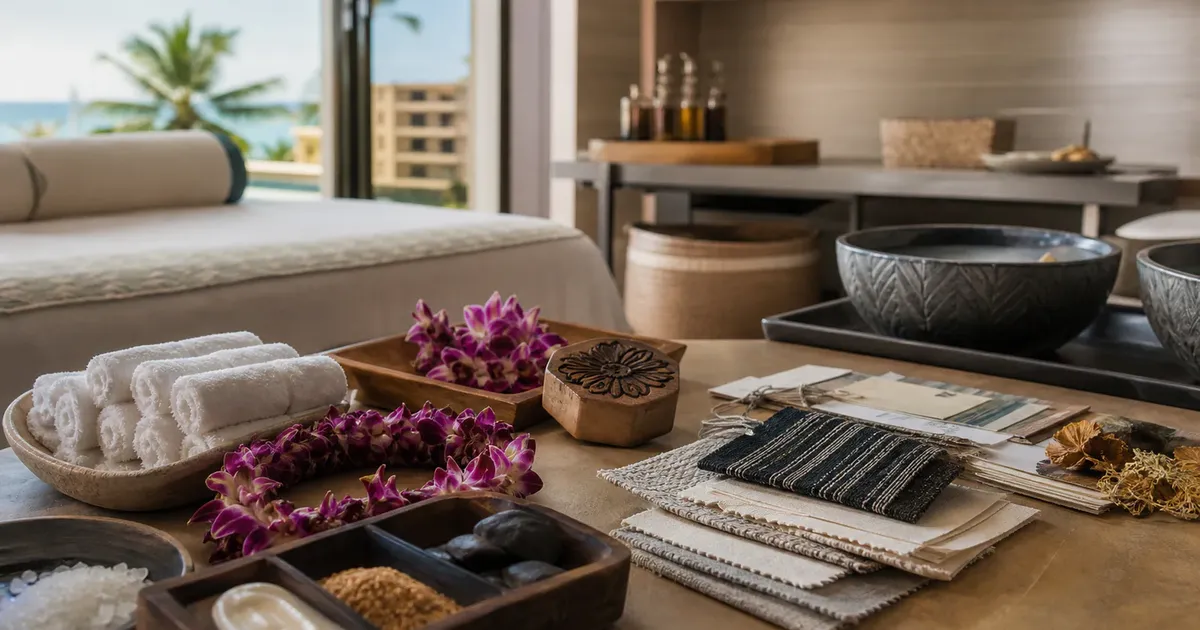
SOCELLE visualizes the operator shift from standalone products toward proof-rich experience bundles.
Waikiki Beach Marriott's programming expansion and Raamae's artisan-brand growth point to a clear pricing signal for spa, wellness, and beauty retail operators: premium value is being built around the visit, the story, and the proof surrounding the product or service.
What happened
Waikiki Beach Marriott Resort & Spa announced new guest programming led by the Ohana Entertainment Center, an indoor game-room concept near the lobby, alongside expanded activities at its Cultural & Activity Center. The resort's own event listings also place wellness and spa-adjacent offers in the same guest ecosystem, from cultural learning activities to Royal Kaila Spa availability.
In a separate signal, The Economic Times profiled Raamae, a sustainable fashion brand built after its founders saw Indian block-printed fabrics valued at premium levels in Bali. The report says the company moved from a Rs 4 lakh starting investment to monthly revenue of up to Rs 18 lakh, while using contemporary palettes, natural or azo-free dyes, and artisan livelihood as part of the value story.
These are not the same business. One is a Waikiki hospitality operator adding programming around a resort stay. The other is an artisan retail brand turning provenance into price power. Together, they show the same commercial pattern: customers are being asked to pay for a more legible experience, not just an isolated room, garment, treatment, or product.
Why it matters for operators
Related on SOCELLE
The live market connected to this report.
From the analysis into the live graph — the roles hiring now and the companies moving in Medspa, straight from the SOCELLE board.
01Waikiki Beach Marriott is adding indoor entertainment and cultural programming around the guest stay.The Lodging Magazine report describes the Ohana Entertainment Center and new Cultural & Activity Center programming.
02Raamae's case shows how provenance and contemporary presentation can support premium artisan positioning.The Economic Times report cites the founders' Bali market insight, natural dye choices, product expansion, and monthly revenue.
03For spa and wellness operators, the commercial lesson is bundled value clarity rather than simple discounting.SOCELLE analysis synthesizes the cluster through resort wellness, beauty retail, and service add-on economics.
Continue from this signal
Connect the report to the market.
Use the topic, hiring, and company paths below to keep moving from the analysis into the public SOCELLE graph.
SOCELLE publishes market & industry information, not medical, clinical, or professional advice. Always consult a qualified professional before making health, treatment, or business decisions.
The intelligence digest
More reads like this, once a week
SOCELLE Intelligence Desk analysis delivered quietly every Monday — the signals that moved, the market reads worth holding, the moves other operators are making.
Free. No spam. Unsubscribe anytime. We use your details per our Privacy Policy and never sell them.
For spa and beauty operators, this matters because price resistance often begins when the client cannot see what changed. A facial, massage, scalp service, sunscreen recommendation, or recovery add-on can feel expensive when it is presented as a line item. It can feel more defensible when the operator frames it as part of a complete visit: consultation, treatment, retail support, aftercare, and sensory context.
The Waikiki signal is useful because it treats programming as an operating layer. A guest is not only buying access to a room or a restaurant; the property is adding reasons to stay on site, bring family members, extend time in shared spaces, and associate the hotel with memory rather than lodging alone. A resort spa can apply the same logic without copying an entertainment center. The relevant move is to make the pre-treatment and post-treatment moments work harder: a visible recovery menu, a short cultural or ingredient story, a retail counter that connects sunscreen or body care to the day's service, and booking flows that make add-ons feel planned rather than opportunistic.
Raamae adds the retail lesson. The Economic Times account emphasizes that the founders saw premium willingness in Bali when sellers made the craft, labor, and heritage understandable. For beauty retail, the parallel is not to write longer product copy. It is to make sourcing, ingredient rationale, refill behavior, service pairing, or maker context visible enough that a client understands why this item belongs in a higher-price basket.
That is especially relevant for spa and salon teams that already sit between service and retail. Many operators underuse that position. They either discount retail to move inventory or leave products on shelves with little context. The better model is a proof-rich recommendation: the product is tied to the treatment performed, the climate or client routine, the ingredient or material rationale, and the expected use case. This is market information, not clinical, legal, or business advice, but the operator implication is practical: pricing power improves when the client can repeat the reason for the price in one sentence.
The risk is overbuilding. Experience-led pricing fails when it becomes clutter, forced entertainment, or a vague premium label. A medspa, salon, hotel spa, or beauty boutique does not need more decoration. It needs a tighter value architecture: which add-on increases dwell time, which retail item improves the service story, which cultural or provenance cue is credible, and which bundle can be repeated by staff without sounding scripted.
What to watch
Whether resort spas attach more wellness, retail, and family-friendly programming to summer and early fall packages.
Whether beauty boutiques borrow hospitality cues, including appointment rituals, consultation counters, and clearer service-to-retail bundles.
Whether artisan and ingredient-led brands make provenance easier to verify at the shelf, not only on the about page.
Whether operators measure attachment rate, repeat booking, and average ticket by bundle type instead of treating programming as soft brand activity.
The next pricing edge will likely come from operators that make value visible before they raise the price. For SOCELLE's Intelligence reader, the signal is not entertainment or artisan fashion on its own; it is the move toward priced experiences that clients can understand, remember, and buy again.