Sephora's demand play meets salon pricing pressure
AI-assisted briefJun 26, 2026/4 min read
Cited sources: 5 · Updated Aug 2, 2026
Forum coverage and fresh nail-service discussions point to the same operator issue: desire is valuable only when pricing, education, and trust keep pace.
Share this report
Send it to a colleague or save the link for later.
This is the public read. The company intelligence brief goes further.
The public compatibility offer for the $299 Company tearsheet in Report Studio. Wider market, product, talent, and custom questions use the typed report catalog.
$299
one report
One-company operating brief with the decision question and next actions
Company, hiring, and published market context where evidence exists
Source notes, caveats, and a plain-method note for major claims
Private report delivery through the owner-scoped workflow
Scope is confirmed and sources are reviewed before anything is charged.
Beauty demand is being built at the retail-leadership level while salon clients are testing whether premium services feel transparent enough to trust.
What happened
The latest SOCELLE pulse grouped eight fresh signals around beauty demand, service behavior, and nail-salon trust. At the top of the cluster, The Business of Fashion covered the second session of The Business of Beauty Global Forum 2026 and a separate interview with Sephora chief executive Guillaume Motte focused on creating demand and scaling desire. Those signals sit at the strategic end of the market: how large beauty retailers keep consumers engaged, curious, and ready to spend.
The same pulse also picked up a different but connected conversation inside nail services. Reddit r/Nails posts from the same window surfaced consumers discussing favorite nail looks, beach nails, press-on practice sets, encapsulated work after courses, a first manicure with an unexpected price change, and questions about polish removal with an e-file-like tool. These are not formal surveys, and SOCELLE treats them as directional consumer signals. But their value is operational: they show where desire reaches the counter, the chair, and the receipt.
Taken together, the cluster says the beauty market is not short on interest. The pressure point is whether operators can convert that interest without creating uncertainty.
Why it matters for operators
For beauty retailers, Sephora's framing matters because demand is no longer just a marketing outcome. It is an operating discipline. Store experience, assortment rhythm, product education, staff language, sampling, loyalty mechanics, and service adjacency all shape whether a shopper feels pulled toward the next purchase. When a global retailer talks about scaling desire, smaller operators should hear a practical instruction: demand has to be designed, not hoped for.
For salons and nail studios, the consumer-side posts show the same issue at a smaller scale. Nail art, gel upgrades, press-ons, encapsulated designs, and removal tools can all support premium pricing. The client may want the expressive result. The risk appears when the client does not understand the price step, the tool being used, or why a service changed from the menu number they expected.
Evidence and answers
Structured for quick review.
Key claims
01Beauty retail leaders are framing demand creation as a strategic growth lever.BoF's forum coverage centered Sephora leadership commentary on creating demand and scaling desire.
02Recent nail-service discussions show consumers questioning surprise add-on pricing and tool use.SOCELLE observed current Reddit r/Nails posts about manicure pricing and salon removal tools as directional consumer-service signals.
03Practice, education, and nail-art experimentation are visible consumer and technician themes in the current signal cluster.The cluster included fresh nail-art practice, course, and press-on discussions alongside retail-demand coverage.
Continue from this signal
Connect the report to the market.
Use the topic, hiring, and company paths below to keep moving from the analysis into the public SOCELLE graph.
SOCELLE Intelligence Desk analysis delivered quietly every Monday — the signals that moved, the market reads worth holding, the moves other operators are making.
Free. No spam. Unsubscribe anytime. We use your details per our Privacy Policy and never sell them.
That makes price architecture a trust issue, not a back-office issue. If gel is one price, stickers are another, removal is separate, shaping is separate, and advanced art sits in a different tier, the menu needs to make that visible before the hand reaches the lamp. A premium service can feel fair when the client sees the choice. The same service can feel deceptive when the difference appears only at checkout.
The tool question matters for the same reason. A client asking whether a salon is using a "sander" is usually not asking for technical terminology. They are asking whether the process is safe, normal, and appropriate. Operators do not need to give clinical advice or over-explain technique. They do need a short, consistent explanation for what an e-file or buffer is being used for, when manual removal is available, and how the technician protects the natural nail.
The education signal also cuts both ways. Posts about practicing press-on sets or taking nail courses show continued appetite for skill-building and self-expression. That can support classes, retail kits, technician content, and entry-level service ladders. But it also raises the bar for professional work. When consumers can practice at home and compare results publicly, salons need cleaner consultation language, sharper finish standards, and clearer reasons to pay for a professional appointment.
The operator takeaway is simple: desire and trust have to move together. Retail teams can create interest with launches, merchandising, and content. Salon teams can create interest with art menus, seasonal looks, and technician portfolios. But the margin is protected by what happens after the client says yes: visible pricing, clean service boundaries, accurate timing, hygiene cues, and explanations that make the premium feel earned.
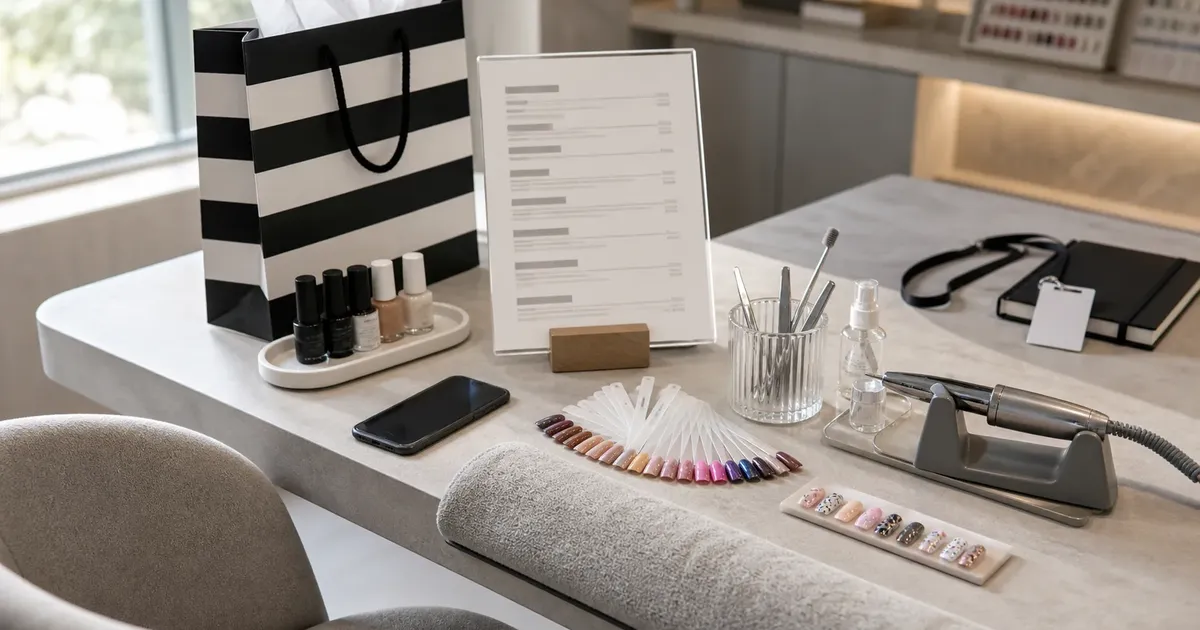
This is also where beauty-retail and salon strategies start to overlap. A retailer selling nail, hand-care, or treatment products can use service-style education to reduce uncertainty. A salon can borrow retail discipline by displaying sample tips, tiered art menus, prep tools, and aftercare products in a way that makes the service easier to choose. Both sides benefit when the client understands the path from inspiration to result.
For SOCELLE operators tracking `/intelligence`, the strongest signal is not that nails are trending. The stronger signal is that consumers are comfortable wanting more complex beauty outcomes while also becoming less tolerant of vague pricing and unclear process.
What to watch
Watch whether salon menus become more explicit through summer 2026: separate gel, removal, repair, art, stickers, chrome, encapsulation, and advanced design tiers. The more visible the menu, the easier it becomes to sell premium work without checkout friction.
Watch technician education as a marketing asset. If more operators show training, sanitation, sample work, and tool rationale without making medical claims, they can turn consumer uncertainty into confidence.
Watch beauty retailers for service-adjacent merchandising. Nail-care, hand-care, treatment, and tool categories can borrow from salon consultation logic: show the step, explain the result, price the add-on clearly, and make the next choice obvious.
The market is still rewarding desire. The operators who benefit most will be the ones that make the premium feel legible before the client has to ask.
Prepared with AI assistance by the SOCELLE Intelligence Desk from the publications cited in this report.
SOCELLE publishes market & industry information, not medical, clinical, or professional advice. Always consult a qualified professional before making health, treatment, or business decisions.
Bruce Tyndall— Analyst of Record. 13+ years in beauty and wellness marketing leadership — Estée Lauder, Wella, Kevin Murphy, Naturopathica. Principal Consultant. LinkedIn.