Story-led nail art is turning sets into booking signals
AI-assisted briefJun 20, 2026/4 min read
Cited sources: 8 · Updated Aug 2, 2026
A fresh cluster of nail posts shows clients rewarding themed sets, personal references, and visible technique with attention salons can turn into clearer booking menus.
Share this report
Send it to a colleague or save the link for later.
This is the public read. The company intelligence brief goes further.
The public compatibility offer for the $299 Company tearsheet in Report Studio. Wider market, product, talent, and custom questions use the typed report catalog.
$299
one report
One-company operating brief with the decision question and next actions
Company, hiring, and published market context where evidence exists
Source notes, caveats, and a plain-method note for major claims
Private report delivery through the owner-scoped workflow
Scope is confirmed and sources are reviewed before anything is charged.
Nail clients are treating detailed sets as personal storytelling objects, and that changes how salons should package, price, and schedule nail art.
What happened
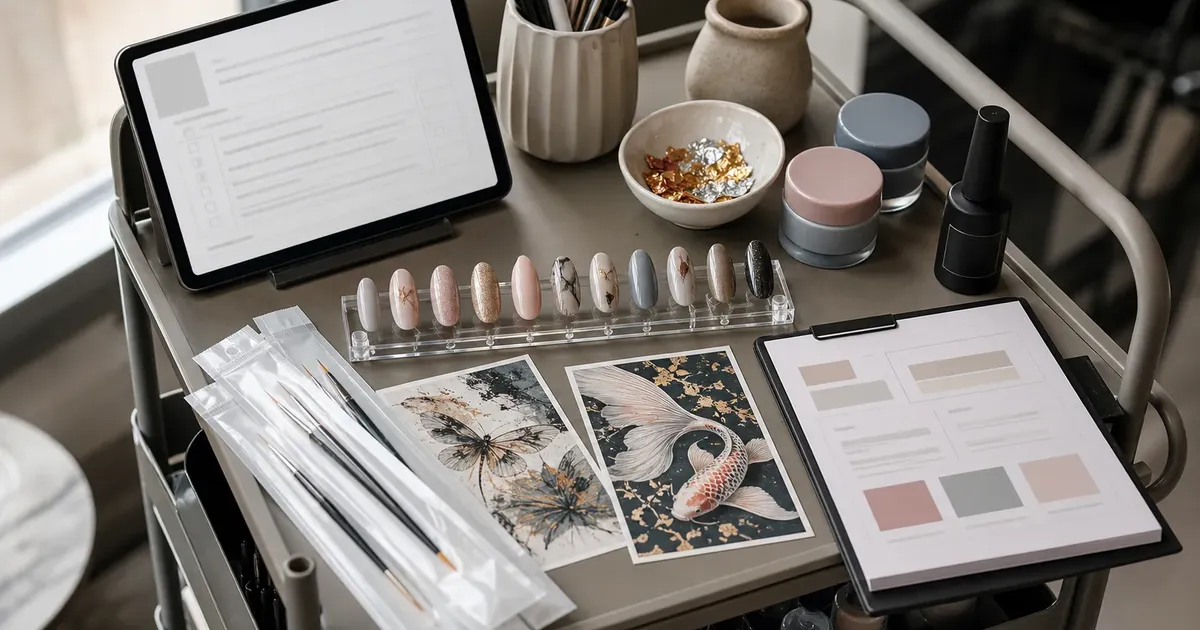
A fresh Reddit nail-art cluster moved in one direction: consumers are posting sets that carry a reference, a mood, or a story, not just a shade choice. One client highlighted a bug-themed set that took five hours to finish, while another showed Juneteenth nails built with foil flakes over black polish, matte finish, and a glow top coat. A koi pond-inspired set turned the question toward wearable color preferences, with pink and blue as the starting point. Another post asked for better gel polish, base coat, primer, top coat, shine, and rubber-base guidance from a beginner nail technician serving herself and clients.
The same pattern continued across more personal examples. A client described a favorite nature-themed set but covered the technician's tag because the artist had no availability. A parent made press-on nails for a child before a trip. Another nail artist asked why client demand was not matching the work, while also claiming retention of four weeks or more without lifting. A separate poster shared Loki-inspired nail art, reinforcing that pop-culture and character references remain part of the nail-art brief.
Taken together, this is not a single viral nail shape or color. It is a service-design signal. Clients are bringing emotional references, event timing, fandom, family context, product expectations, and proof of durability into the same conversation.
Why it matters for operators
For salons, the immediate lesson is that high-detail nail art should not sit inside a generic add-on line. A five-hour set is a different business object from a simple gel manicure. It needs its own booking path, consultation step, deposit policy, reference-upload flow, and aftercare expectations. If the menu says nail art but the appointment book does not distinguish between two accent nails and a full narrative set, the salon is asking the front desk and technician to absorb the margin risk.
Related on SOCELLE
The live market connected to this report.
From the analysis into the live market — the roles hiring now and the companies active in Intelligence, straight from the SOCELLE board.
SOCELLE Intelligence Desk analysis delivered quietly every Monday — the signals that moved, the market reads worth holding, the moves other operators are making.
Free. No spam. Unsubscribe anytime. We use your details per our Privacy Policy and never sell them.
The cluster also shows why reference intake matters. The strongest posts are not framed around technical vocabulary alone. They mention insects, koi ponds, Juneteenth styling, a comic-book character, travel, child-size press-ons, and personal comfort zones. That means the operator's consultation form should ask for theme, event date, color tolerance, finish preference, durability needs, and inspiration images before the appointment starts. This reduces chair-time drift and gives the artist a cleaner basis for quoting.
Pricing should follow visible labor, not only product cost. Fine line work, layered color, foil placement, matte and glow finishes, charms, press-on sizing, and custom concept translation each add time. A salon that wants to attract this client should consider a tiered art menu: simple accents, structured themed set, advanced character or miniature-detail set, and custom press-on commission. The client can still feel creative, but the team has a shared commercial language.
The product conversation is also moving closer to trust. The beginner technician asking about gel brands, primer, base coat, top coat, shine, and rubber base is not just shopping. She is trying to understand what clients will experience after they leave the chair. For operators, that means product standards belong in training and client communication. Staff should be able to explain why a base system was chosen, what aftercare is expected, and what the salon will or will not promise about wear.
Retention claims need discipline. A post saying four-plus weeks without lifting may attract attention, but salons should avoid turning that into a blanket promise. Lifestyle, nail condition, prep, product system, length, and aftercare all affect wear. The stronger commercial move is to frame retention as a monitored service outcome: document common breakage points, track repairs, and use that data to refine prep protocols and client education.
Capacity is the final signal. When a client hides a technician's tag because that artist has no availability, scarcity is already part of the brand. That can be good for demand, but unmanaged scarcity creates missed revenue and client frustration. Operators should decide whether advanced nail art is a hero service, a limited artist-led category, or a recurring commission product. Each choice affects staffing, training, social content, and waitlist handling.
What to watch
Watch whether salons turn themed nail art into explicit menu architecture rather than leaving it as a custom request. The next practical markers are booking forms that collect references, art-tier pricing that mentions time, and social posts that explain why certain sets require longer appointments.
Also watch product language. If clients and beginner technicians keep asking about shine, primer, rubber base, and wear, product education will become part of conversion. Salons that can explain their system plainly may have an advantage over salons that rely only on finished-set photos.
The broader operator takeaway is simple: story-led nail art is not only content. It is inventory, labor planning, consultation design, and client-retention work. The salons that treat it that way will be better positioned when the next reference-heavy nail cycle arrives.
Prepared with AI assistance by the SOCELLE Intelligence Desk from the publications cited in this report.
SOCELLE publishes market & industry information, not medical, clinical, or professional advice. Always consult a qualified professional before making health, treatment, or business decisions.
Bruce Tyndall— Analyst of Record. 13+ years in beauty and wellness marketing leadership — Estée Lauder, Wella, Kevin Murphy, Naturopathica. Principal Consultant. LinkedIn.