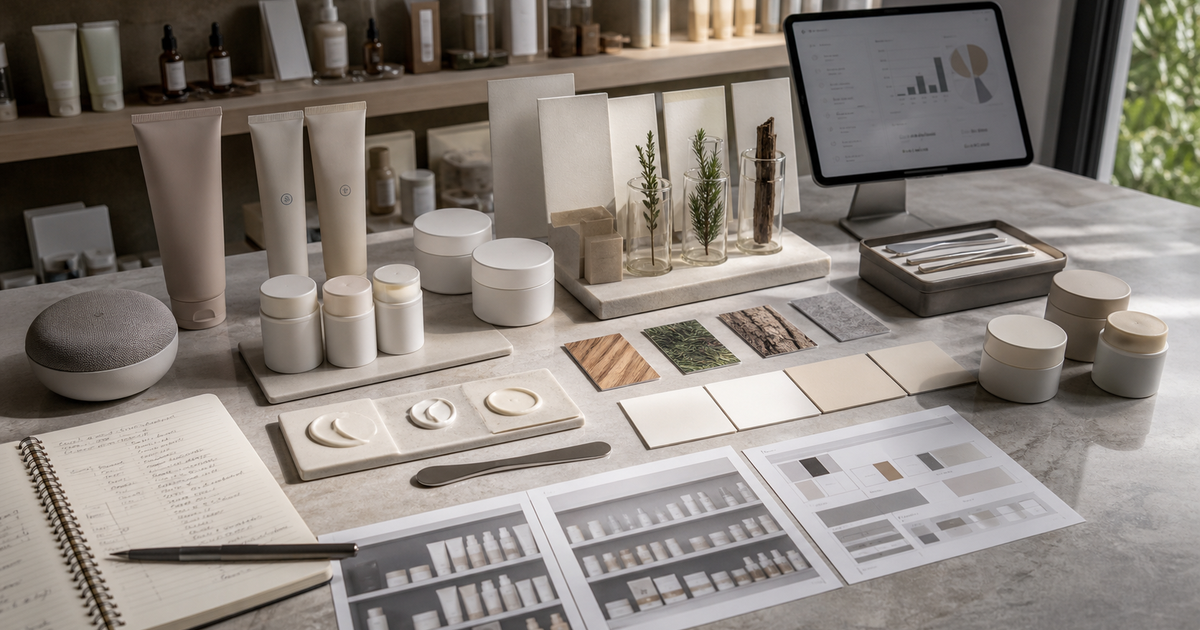
A new cluster points to the same commercial truth from trade research and skincare forums: texture, sound, spread, and comfort now decide whether a premium claim holds.
Beauty pricing is moving closer to the skin: recent signals show that texture, sound, spread, and comfort are becoming the proof points customers use to decide whether a product deserves a premium.
What happened
A fresh SOCELLE signal cluster joined one trade-side product development theme with two consumer-side skincare discussions. In Premium Beauty News, Mintel points to sound as a still-underused part of cosmetic sensoriality, alongside the familiar cues of texture, fragrance, and visual finish. The commercial implication is straightforward: beauty brands are searching for sensory territory that can make crowded categories feel more distinct.
At the same time, skincare communities are debating value in much more practical language. One r/30PlusSkinCare thread centers on a shopper who keeps returning to a standard Aveeno lotion because richer alternatives feel worse on their face or are associated with breakouts. Another thread compares face sunscreens by how easily one spreads and how gentle another feels during morning use.
Those stories are not the same topic on the surface. One is about cosmetic innovation; the others are about moisturizer and sunscreen preference. Together, they point to a pricing reality that beauty teams cannot ignore: sensory proof is not decoration around the formula. It is becoming the formula's commercial evidence.
SOCELLE publishes market & industry information, not medical, clinical, or professional advice. Always consult a qualified professional before making health, treatment, or business decisions.
The intelligence digest
More reads like this, once a week
SOCELLE Intelligence Desk analysis delivered quietly every Monday — the signals that moved, the market reads worth holding, the moves other operators are making.
Free. No spam. Unsubscribe anytime.
Why it matters for operators
For beauty brands, the old hierarchy of value is weakening. Ingredient story, clinical language, founder narrative, and packaging still matter, but they are no longer enough when the customer is judging a product within seconds on the hand, face, or routine shelf. If a moisturizer pills, feels heavy, creates anxiety around breakouts, or does not give a clear reason to switch from the reliable basic product, the premium price has already lost part of its argument.
That matters most in categories where functional claims have become similar. Moisturizers, barrier creams, daily sunscreens, gentle cleansers, and treatment-support products often carry overlapping language: hydrating, calming, lightweight, restorative, protective. The difference the shopper can verify is sensory: slip, absorption, residue, scent level, sound of the pump or cap, how the cream breaks, how the sunscreen spreads, and whether the finish works under makeup or during a workday.
For retailers, this shifts the merchandising task. A tester counter that only shows product names and prices leaves staff to explain value verbally. A better counter lets shoppers compare textures side by side, understand finish, and feel the gap between basic, mid-tier, and premium. Training should move beyond ingredient recall into sensory translation: what does this texture do, who is likely to prefer it, what complaint does it solve, and what tradeoff should be disclosed before purchase?
For salons, spas, and medspa-adjacent retail, the signal is even sharper. Clients often buy recommended products because they trust the professional, but they keep buying because the product fits their routine. A provider can avoid overpromising by making the sensory test part of the consultation: show the amount, let the client feel the texture, explain finish and residue, and position the product as market information, not clinical, legal, or business advice. No medical dosing, clinical guidance, or treatment claims are needed to make the retail logic stronger.
For product teams, sound is worth watching because it widens the field of sensory design. The click of a compact, the softness of a closure, the pump action, the mixing sound of a mask, or the quietness of packaging can all influence perceived quality. But sound should not become another superficial gimmick. It has to support the product job: reassurance, precision, cleanliness, durability, ritual, or ease of use.
The cluster also suggests a research method operators can use immediately. Do not only ask whether customers like the product. Ask what made them hesitate, what product they returned to, what texture they trusted, what felt easier in the morning, and what made the price feel fair. Those answers are often more useful than a general satisfaction score.
What to watch
Whether more brands start briefing labs and packaging teams on sound, not only texture and fragrance.
Whether premium sunscreens and moisturizers make spread, finish, and residue easier to test in retail.
Whether community language around breakouts, heaviness, and gentleness starts appearing more directly in product pages and staff scripts.
Whether value brands use sensory clarity to defend repeat purchase against more expensive clinical-positioned products.
The next pricing advantage in beauty may not come from a louder claim. It may come from a product experience that makes the price feel obvious before the customer reads the box.