SOCELLE Intelligence Desk
Summer beauty demand is tilting toward affordable scent and vivid color
From the intelligence desk
Read the wireSOCELLE Intelligence Desk
Summer beauty demand is tilting toward affordable scent and vivid color

SOCELLE Intelligence Desk
Bio-Based Ingredient Growth Meets Acne-Evidence Pressure
SOCELLE Intelligence Desk
Hanwha, Rheinmetall, and the Knicks Signal a Harder Attention Market
SOCELLE Intelligence Desk
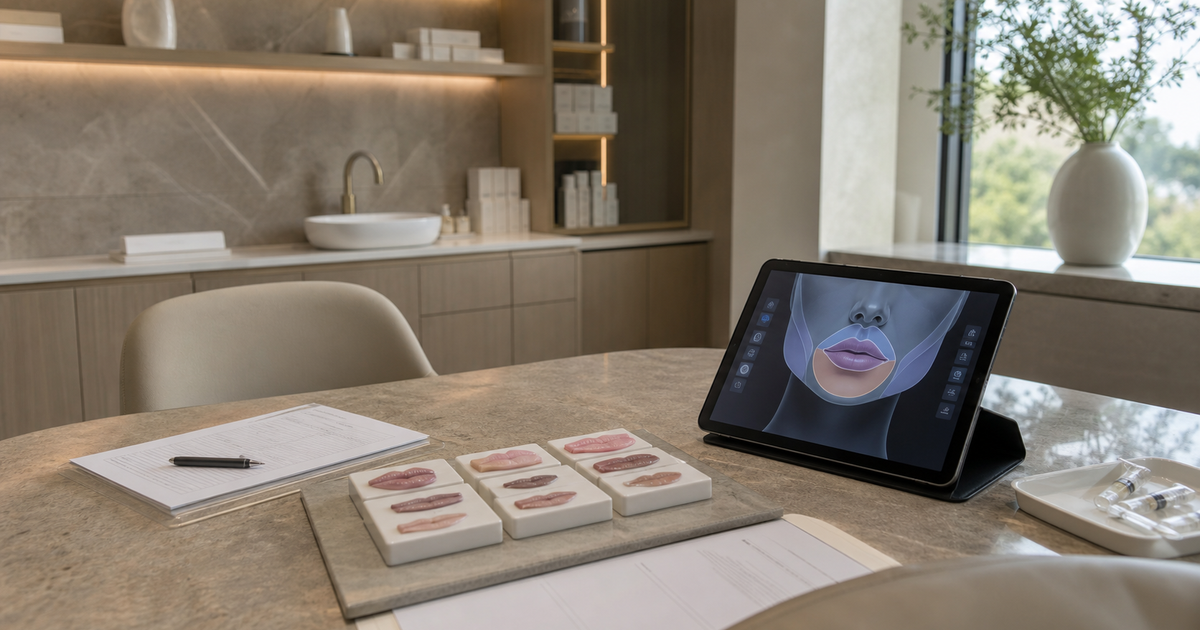
Lip plumpers and GLP-1 face shifts are reshaping aesthetics demand
Hanwha's KAI stake move, LIG's Rheinmetall tie-up, and the Knicks' fashion surge show how capital, culture, and discretionary attention are getting more crowded for operators.
Hanwha Aerospace's plan to buy more Korea Aerospace Industries shares, LIG D&A's partnership with Rheinmetall, and the New York Knicks' spillover into fashion coverage do not look like beauty headlines at first glance. They still matter to operators because they show how quickly capital, culture, and discretionary attention can bunch together around stories outside beauty, forcing spas, salons, medspas, and brands to work harder for the same share of mind.
In South Korea, Yonhap reported that Hanwha Aerospace would acquire additional Korea Aerospace Industries shares in a 500 billion won move. Separately, Yonhap also reported that LIG D&A and Rheinmetall are teaming up to supply air defense systems to Europe. These are industrial and defense stories, but together they point to the same underlying pattern: large, fast-moving companies are still willing to act decisively around ownership, partnerships, and strategic positioning.
That same pattern showed up in culture rather than industry. Business of Fashion wrote that the New York Knicks' current momentum has become, in its words, "a true zeitgeist moment" for fashion. The point is not basketball. The point is that attention is concentrating around stories with velocity, symbolism, and social carry.
Taken together, these sources describe a week in which strategic capital moves and cultural heat are both intensifying. For operators, that is the real cluster, even if the source stories live in different sections of the media economy.
The intelligence digest
SOCELLE Intelligence Desk analysis delivered quietly every Monday — the signals that moved, the market reads worth holding, the moves other operators are making.
Free. No spam. Unsubscribe anytime.
Beauty and wellness operators often plan as if category relevance is enough to secure attention. In a crowded market, it is not. When high-visibility industrial news and fashion-adjacent cultural narratives rise at the same time, they compete with beauty launches for the same finite resources: audience focus, partner bandwidth, founder time, investor curiosity, premium press space, and even team morale.
For salons, medspas, and spas, that means generic seasonal messaging gets weaker. If the broader media environment is full of decisive moves and culturally legible storylines, operator messaging has to be more specific about what changed, why now, and for whom. A vague summer promotion can disappear in a week like this. A stronger operating move, such as a new service bundle, a sharper membership rationale, or a clearer retention offer, has a better chance of landing because it answers a real customer decision rather than asking for passive attention.
For beauty brands and retailers, the lesson is merchandising discipline. Culture can move faster than product calendars. If a non-beauty story is dominating conversation, brands do not need to imitate it, but they do need to understand what it is doing structurally. The Hanwha and LIG items are both about commitment and strategic alignment. The Knicks item is about visible cultural momentum. In beauty terms, that suggests three practical filters: what are you committing to publicly, which partnerships actually sharpen your position, and which story can travel beyond your own customer base without sounding inflated?
This also matters for leadership teams watching wholesale, partnerships, or fundraising. External headlines can reset the tone of business conversations very quickly. Counterparties become more selective when the market feels noisy and more responsive when a brand can explain its relevance cleanly. Operators who arrive with clear proof, a narrow thesis, and current customer evidence are better positioned than teams still relying on broad category optimism.
The staffing implication is quieter but real. Attention-heavy weeks create internal pressure to chase what feels current. That is rarely the best use of time. Operators should be careful not to turn every external signal into a reactive content sprint. The better move is to use the signal as an editing tool: tighten the offer, clarify the client promise, and cut anything that reads like filler. That is often worth more than posting more often.
For that reason, the most useful internal link this week may not be a trend post but a planning checkpoint inside your own [SOCELLE intelligence workflow](/intelligence) and report library at [/intelligence/reports](/intelligence/reports). If outside sectors are winning the headline cycle, operators need tighter interpretation, not louder noise.
Watch whether more operator-facing sectors start borrowing the language of decisive repositioning rather than lifestyle aspiration alone. If they do, beauty brands may need harder business framing in launch copy, wholesale decks, and founder interviews.
Watch for more culture stories that travel across sports, fashion, and retail without stopping at one category. That kind of crossover can reshape consumer attention faster than product innovation news does.
Watch your own calendar. If the next two weeks are filled with soft promotions, broad awareness pushes, or undifferentiated social content, this cluster is a warning that the market around you is getting sharper. Operators do not need to become louder than every external story, but they do need to become clearer. This is market information, not clinical, legal, or business advice.