Jo Malone Tests Visual Search as Fragrance Discovery Shifts
Jun 21, 2026/4 min read
Jo Malone London's Pinterest Scent Scanner points to a fragrance market where taste signals, collections, dupes, home scent, and provenance now shape the sale.
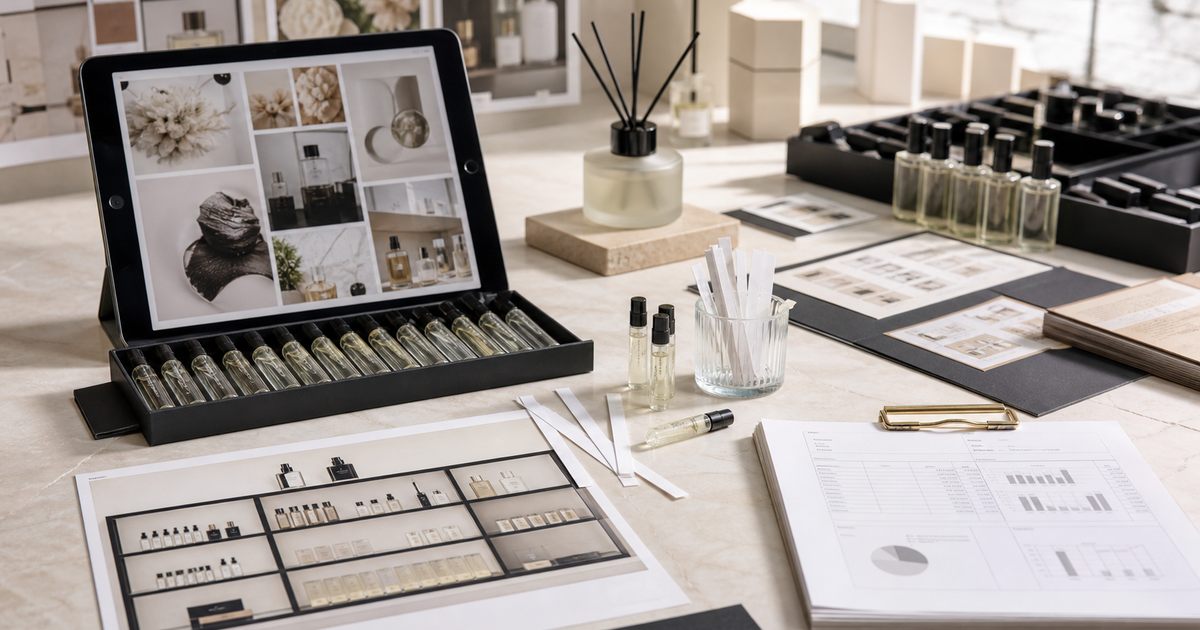
SOCELLE editorial image generated for a report on visual search and fragrance discovery.
Jo Malone London's Pinterest Scent Scanner turns saved visual preferences into fragrance recommendations, making visual taste a more explicit input in how fragrance is discovered, sampled, and sold.
What happened
Jo Malone London has introduced Scent Scanner, a Pinterest experience launching in the United States and France, according to Premium Beauty News. The tool reads the kinds of images a user saves or curates on Pinterest and translates those taste signals into Jo Malone London fragrance recommendations.
That matters because the starting point is not a fragrance note, occasion prompt, or counter associate script. It is a visual preference graph: interiors, colors, moods, textures, destinations, tablescapes, wardrobes, and aspirational rooms. Jo Malone is testing whether scent can be merchandised through the same taste language consumers already use to organize style.
The broader cluster around fragrance behavior points in the same direction. A fragrance collector on Reddit framed buying as a wardrobe project shaped by phases, brand completion, and category exploration. Another shopper discussed English Laundry's Armour through the lens of chasing a familiar fragrance profile at a different price point. Others asked how to reproduce hotel-style ambient scent at home, how to replace a discontinued favorite, and whether a small French perfume shop was selling artisan work or rebranded clones.
Taken together, the signal is not just that consumers want personalization. They want a system for deciding what a scent is for, whether it belongs in a collection, whether a substitute is credible, whether a room can carry a signature, and whether the story behind a product can be trusted.
Why it matters for operators
SOCELLE publishes market & industry information, not medical, clinical, or professional advice. Always consult a qualified professional before making health, treatment, or business decisions.
The intelligence digest
More reads like this, once a week
SOCELLE Intelligence Desk analysis delivered quietly every Monday — the signals that moved, the market reads worth holding, the moves other operators are making.
Free. No spam. Unsubscribe anytime.
For fragrance brands and beauty retailers, visual search changes the merchandising brief. The old counter model asks the customer to describe notes or choose from a brand family. Many shoppers cannot do that fluently. They can, however, show a saved board, point to a room, describe a hotel lobby, list what they already own, or explain the memory they are trying to replace. Scent Scanner formalizes that behavior into a recommendation path.
The operator takeaway is to stop treating discovery as a single quiz. A better fragrance journey now needs several entry points: visual taste, use case, collection gap, price tolerance, home environment, and provenance confidence. A boutique associate can ask what the customer saves visually. A salon or spa retail team can connect ambient scent to the service room, reception area, and take-home routine. A brand can build landing pages that pair fragrance families with interiors, wardrobe moments, or hosting rituals without turning the product into vague lifestyle copy.
This also raises the bar for retail data. If Pinterest-style visual preference becomes a serious signal, brands will need to compare it against sampling conversion, repeat purchase, basket size, and return behavior. A beautiful match is not enough. The question is whether the tool helps customers choose with less hesitation and fewer returns.
The Reddit cluster shows where human service still matters. The collector needs structure: what is redundant, what fills a gap, what belongs by season or occasion. The dupe-seeker needs a transparent comparison, not a vague claim that two scents share a mood. The home-scent shopper needs operational advice about intensity, placement, safety, and maintenance. The buyer questioning an obscure artisan label needs provenance cues, not romance. Those are all service moments that a retailer, spa, or fragrance brand can own.
There is also a margin implication. Visual discovery can push shoppers toward a fuller wardrobe instead of a single bottle if the recommendation logic is responsible. That does not mean selling more for the sake of it. It means showing why a lighter daytime scent, a richer evening scent, a home diffuser, and a travel format solve different jobs. Operators that make those distinctions clearly can build higher-value baskets without relying on pressure.
For spas, medspas, salons, and hospitality-adjacent beauty spaces, the home-scent thread is especially relevant. Consumers already notice signature scent in hotels and resorts. Beauty service businesses can treat ambient scent as part of the client memory, then connect it to retail only when the product story, allergen sensitivity, and environment fit are handled carefully. The service room becomes a discovery environment, but it must remain respectful and transparent.
What to watch
Watch whether Jo Malone extends Scent Scanner beyond the United States and France, and whether Pinterest reports any commerce or engagement outcomes from the experience. The important metrics are not clicks alone. Look for sampling requests, email capture, store appointment booking, repeat purchase, gift conversion, and whether recommendations vary meaningfully by visual input.
Operators should also watch for copycat tools across fragrance, home scent, and prestige beauty retail. If every brand builds a moodboard recommender, the differentiator will move to inventory depth, associate training, provenance, and post-purchase education.
The next practical step is to audit the current fragrance journey. If the only paths are note family, bestseller, and occasion, the experience is behind consumer behavior. Add one visual-taste prompt, one collection-building prompt, one home-scent prompt, and one trust prompt. Then measure which one produces better sampling intent and cleaner follow-through.
This is market information, not clinical, legal, or business advice. The useful signal is simple: fragrance discovery is becoming less about asking shoppers to speak the industry's language, and more about translating the language they already use.