Post-Procedure Topicals Become the Medspa Aftercare Battleground
Jun 22, 2026/4 min read
LRM Aesthetics' new topical packaging lands as clients are asking sharper questions about downtime, sun-protection feel, hydration, and recovery routines.
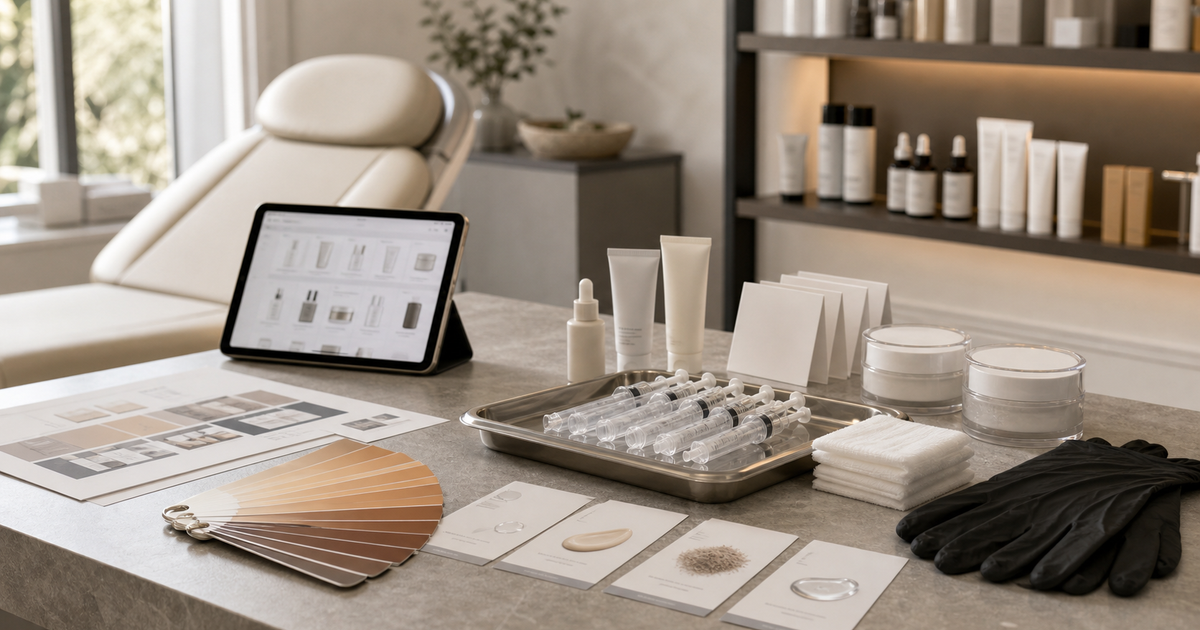
SOCELLE editorial image representing the operational shift from procedure-only selling to post-procedure recovery merchandising.
LRM Aesthetics' new topical packaging is landing at the same moment clients are broadcasting a clear demand signal: aftercare is no longer a quiet add-on to aesthetic procedures; it is becoming part of the buying decision.
What happened
Plastic Surgery Practice reported that LRM Aesthetics introduced a new Syringe2Syringe configuration for a topical skin-treatment product, with the stated operational benefit of removing the need for providers to draw individual syringes of hyaluronic acid.
That would be a narrow packaging update if the market were only talking about product format. It is not. In the same signal window, skincare consumers were discussing a set of practical aftercare problems: one medspa client described laser and microneedling recovery that lasted longer than expected; another new retinol user asked for more hydrating daily sun protection; another said daytime sun-care moisturizer migrated into the eyes during ordinary summer movement; others asked about barrier irritation, melasma product choices, intense hydration, and collagen peptide influence.
Taken together, the cluster points to a procedure-adjacent category forming around convenience, tolerance, and trust. The procedure may start the visit, but the client's memory of the purchase is often shaped by the days and weeks after leaving the room.
Why it matters for operators
For medspas, dermatology practices, spas, and advanced skincare retailers, the operator takeaway is not to chase every ingredient conversation. It is to build a more disciplined aftercare system.
The strongest signal is recovery expectation management. A Reddit user reviewing MOXI laser plus microneedling said the procedure itself was quick, but the recovery period felt longer than the clinic's original framing. That kind of post is not a clinical data set, and it should not be treated as one. It is still commercially useful because it shows the exact point where client satisfaction can diverge from staff intent: the service may work, but the client may feel underprepared.
SOCELLE publishes market & industry information, not medical, clinical, or professional advice. Always consult a qualified professional before making health, treatment, or business decisions.
The intelligence digest
More reads like this, once a week
SOCELLE Intelligence Desk analysis delivered quietly every Monday — the signals that moved, the market reads worth holding, the moves other operators are making.
Free. No spam. Unsubscribe anytime.
That makes the aftercare handoff a revenue and retention surface. Operators should be able to explain, in plain language, what products are being used in-room, what products are suggested for home care, what sensations are common enough to discuss ahead of time, and what symptoms require calling the provider. This is market information, not clinical, legal, or business advice, but it is a clear reminder that the post-visit script needs to be as considered as the consult script.
The second signal is sun-care friction. Multiple posts in the cluster are not asking whether sun protection matters in the abstract. They are asking about feel, hydration, sweat migration, tint, dryness, and compatibility with retinoids or recent procedures. That is an assortment problem. A single hero product does not fit every post-procedure client, every skin tone, every climate, or every makeup preference. Operators that retail skincare need a product ladder: mineral options, hydrating options, untinted options, sensitive-skin options, and clear language about when a client should pause and contact the practice.
The third signal is ingredient confidence. Hydration, hyaluronic acid, niacinamide tolerance, barrier irritation, collagen peptides, and pigmentation products are showing up in the same client conversation set. This does not mean operators should overclaim outcomes. It means the floor for education is rising. Clients are comparing procedure add-ons, topical formats, at-home products, and supplement claims in one mental basket. If the practice does not define what each category can and cannot do, the client will assemble that story elsewhere.
This is where LRM's packaging update matters beyond the device room. A topical system that is easier for staff to handle can support consistency, but consistency only matters if the client experience is equally controlled: who explains the product, where it appears in the chart, how it is priced, whether it is sold as part of a recovery kit, and how staff avoid language that turns cosmetic support into a medical promise.
Beauty retailers should read the same signal through a different lens. The post-procedure client is often looking for low-friction replenishment, not a full routine rebuild. A tight edit of recovery-compatible cleansers, moisturizers, and daily sun-care products may convert better than a broad shelf of active-heavy products. The merchandising question is not "more skincare." It is: what does the client need the day after a treatment, the week after a treatment, and when they resume actives?
What to watch
Watch whether more procedure brands move from ingredient claims to workflow claims: easier handling, clearer format, fewer prep steps, more consistent staff usage, and simpler retail handoff.
Watch sun-care assortment inside medspas. If complaints keep clustering around dryness, migration, tint, and sensitivity, practices will need better product matching at checkout and in follow-up.
Watch the language around growth factors, peptides, collagen, and barrier support. The commercial opportunity is real, but so is the compliance risk. Operators should avoid clinical assessment, dosing, and disease-treatment claims, and should keep cosmetic positioning separate from medical advice.
The next competitive edge in aesthetics may not be the device alone. It may be the recovery system around it: the room protocol, the retail kit, the staff script, and the client's confidence that the practice has thought beyond the appointment.