Subtle Nails and Med Spa Training Put Menu Discipline in Focus
Jun 22, 2026/4 min read
Fresh nail trend coverage and AmSpa's Dallas Boot Camp point to the same operating question: which services, training, and retail moves are worth staff time now.
Seasonal service demand only helps operators when it is translated into pricing, training, and menu discipline.
Beauty operators are being handed two different signals with the same message: seasonal demand only matters if the team can turn it into a priced, trained, repeatable service.
What happened
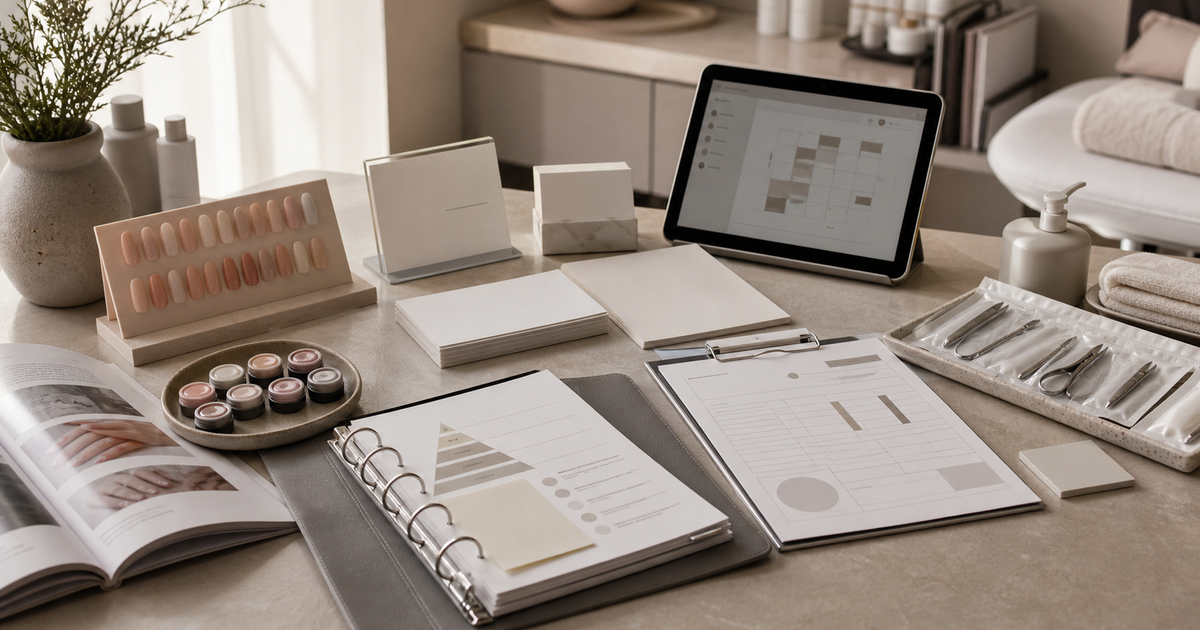
Scratch published a fresh summer nail roundup focused on subtle seasonal styles. The piece framed soft summer nails as a quieter alternative to the neon, embellished, and maximalist nail sets that often dominate warm-weather inspiration. The operator read is not that every salon needs another inspiration board. It is that lower-drama seasonal looks can still carry clear client intent: fresh, polished, easy to wear, and less risky than a high-commitment statement set.
A few minutes later, AmSpa published its Dallas Medical Spa Boot Camp mentorship piece. The article positioned the July 10-11, 2026 Dallas event around direct access to operators, legal and compliance voices, business and financial experts, marketing and conversion leaders, clinical educators, and practice-management mentors. It also framed mentorship as a practical bridge between expensive education and confident execution.
On paper, a nail-art gallery and a medspa training event sit in different parts of the market. For operators, they belong in the same planning conversation. One signal is demand: clients are looking for softer summer services that can be easy to say yes to. The other is capability: teams need enough business, compliance, service, and conversion discipline to know what to offer, how to price it, and when to train around it.
Why it matters for operators
The longest part of the story is not the trend. It is the operating math behind the trend.
For nail salons, subtle summer styles can become a useful seasonal lane because they lower friction. A client who does not want rhinestones, brights, or complicated art may still want a nail look that feels current. That creates room for short add-on menus: sheer overlays, soft chrome, micro-French details, neutral art, cuticle care, and maintenance retail. But the opportunity weakens when the menu is vague. If every look is priced as custom art, front-desk conversion slows and staff confidence varies by technician.
SOCELLE publishes market & industry information, not medical, clinical, or professional advice. Always consult a qualified professional before making health, treatment, or business decisions.
The intelligence digest
More reads like this, once a week
SOCELLE Intelligence Desk analysis delivered quietly every Monday — the signals that moved, the market reads worth holding, the moves other operators are making.
Free. No spam. Unsubscribe anytime.
The better move is to translate the trend into a small set of serviceable offers. Operators can define timing, price bands, technician skill levels, retail pairings, and booking language before the demand peaks. A subtle summer edit should answer basic questions: how long does it take, which products are needed, what is the rebooking cadence, what is the upgrade path, and which examples should staff show to clients who want something current but restrained.
For medspas, the AmSpa signal points to a different version of the same discipline. Training is not just a cost line or a conference badge. It is capacity planning. If a practice sends staff into education without tying it to service mix, compliance standards, patient experience, consultation flow, and KPI ownership, the knowledge may not translate into better operations. If the practice connects training to a specific operating plan, the return is easier to see.
That matters because medspa teams often sit between clinical judgment, consumer demand, and commercial pressure. The AmSpa article emphasizes mentorship, legal and compliance discussions, KPIs, profitability, marketing, lead conversion, patient acquisition, retention, and treatment innovation. Those are not abstract themes. They are the exact areas where practices lose margin or create risk when growth outpaces systems.
The salon and medspa signals also share a staffing lesson. Trends can be added to a menu in an afternoon; team consistency takes longer. If a nail salon promotes soft summer looks before every technician can execute the approved versions, the client experience fragments. If a medspa adds a treatment or consultation offer before the team understands scope, consent, language, and follow-up, the risk is higher. In both cases, the operator should decide what the team is ready to sell before marketing expands the promise.
There is also a pricing lesson. Subtle services are easy to underprice because they look simple. Mentorship and training are easy to under-measure because they feel intangible. Both need clearer accounting. A soft nail service still consumes time, product, chair capacity, content support, and technician skill. A training trip still consumes wages, travel, leadership attention, and implementation time. Operators should attach each decision to a margin, retention, conversion, or risk-reduction goal.
SOCELLE's read: the advantage is not spotting another seasonal trend. It is deciding which trend deserves a trained service, a price, a retail path, and a follow-up plan. That is market information, not clinical, legal, or business advice.
What to watch
Watch whether salons turn subtle summer demand into concise menu edits rather than open-ended custom requests. The strongest operators will make the offer easy to book and easy for staff to explain.
Watch the Dallas Boot Camp agenda as a signal for medspa management priorities heading into July 2026. If compliance, KPIs, conversion, retention, and patient experience remain central, education buyers are likely still looking for practical operating systems, not only technique updates.
Finally, watch for the teams that connect these signals. A salon can use trend demand to plan training. A medspa can use training to narrow service promises. In both cases, the commercial benefit comes from disciplined translation: demand into menu, menu into staff behavior, and staff behavior into repeatable client experience.